Settlement, exercise, and assignment — the full flow
What you will learn
See what happens at expiry — expire worthless, exercise, or assignment — and avoid an in-the-money option quietly turning into a stock position
Three things that can happen at expiry
The last lesson broke premium into intrinsic and extrinsic value. Once you actually hold or sell an option, ask this first: what happens at expiry? Does it turn into stock by itself? Does a large cash amount suddenly leave the account?
At expiry an option has only three endings:
Expire worthless: no intrinsic value, the contract is done.
Exercise: the buyer asks for performance.
Assignment: the seller is forced to perform.
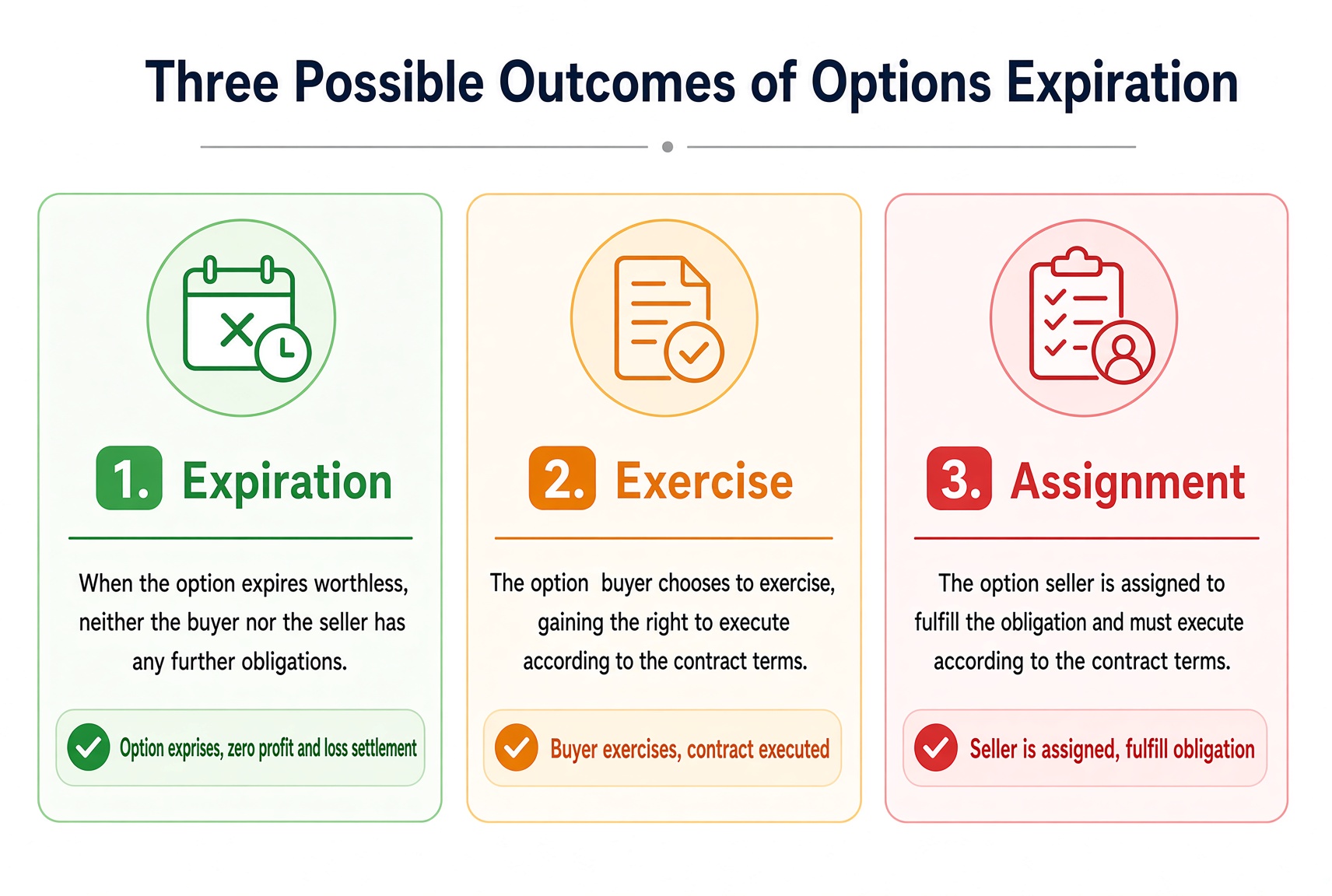
Keep those three separate and expiry day is much less likely to surprise you. We take them one by one.
Takeaway: Expiry is not “it just vanishes.” First remember the three paths: worthless, exercise, assignment.
Expire worthless: the most common case
If at expiry a Call’s strike is above the stock, or a Put’s strike is below it, the option has no intrinsic value — it is out of the money (OTM). The buyer will not exercise. The option dies. The premium stays with the seller.
For the buyer, the loss is the full premium paid. For the seller, this is the ideal result: the duty is gone, the premium stays.
Takeaway: Most options expire worthless. That is one of the reasons selling can work as “collecting rent” over time.
Exercise: the buyer asks for performance
The buyer has the right, at expiry, to make the seller perform at the strike. American-style options can even be exercised early.
Call buyer exercises: buy 100 shares at the strike. The account needs enough cash.
Put buyer exercises: sell 100 shares at the strike. If the account has no shares, it can become a short stock position, or the broker handles it by its rules.
Most U.S. brokers auto-exercise in-the-money (ITM) options at expiry: once intrinsic value is above a threshold, even if you do nothing, the option can become a stock position.
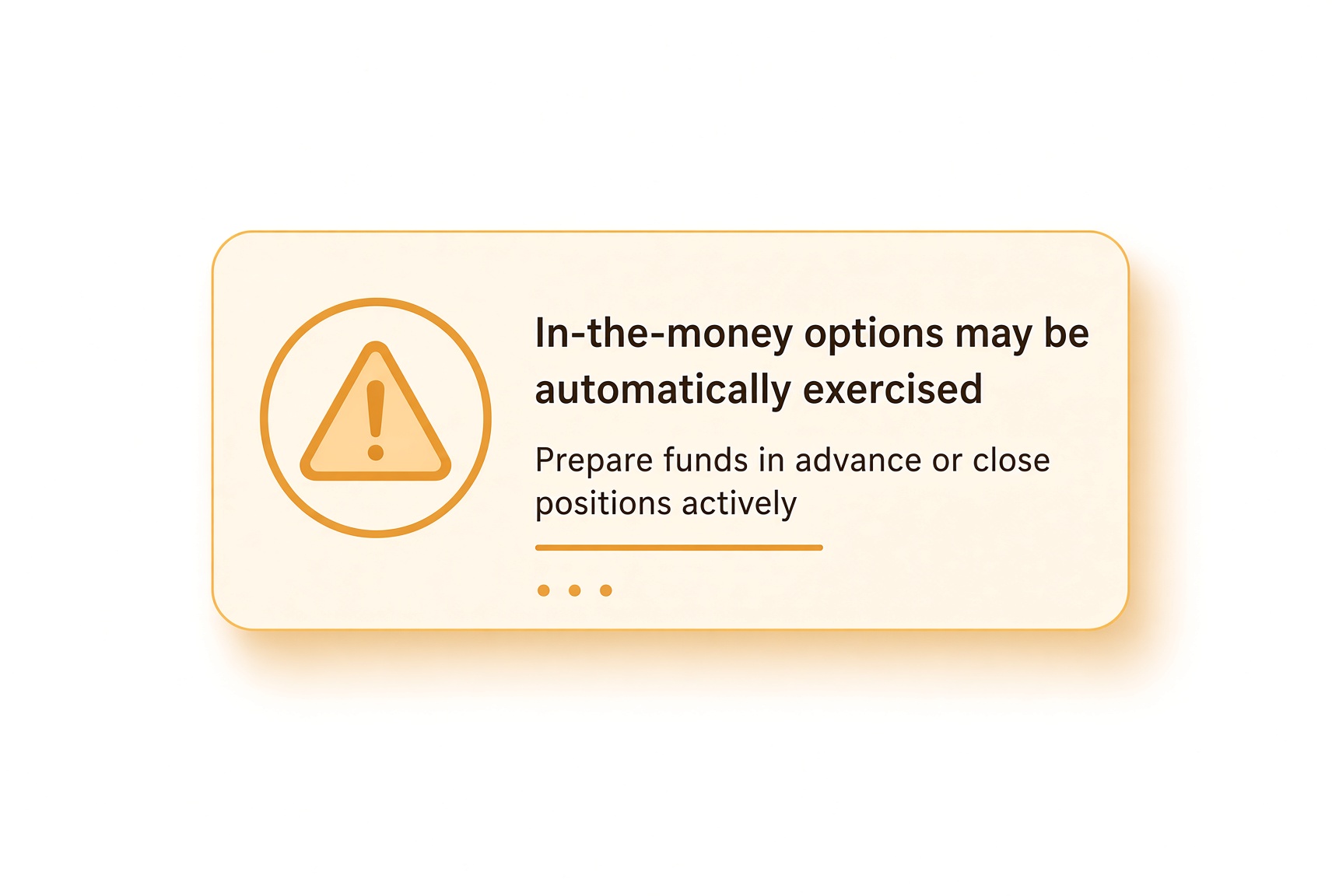
So “it just disappears at expiry” only applies to contracts with no intrinsic value. An ITM option at expiry can easily become 100 shares, and occupy the matching cash or stock.
Takeaway: An ITM option at expiry may auto-exercise. If you do not want the stock, do not wait until the last day.
Assignment: the seller is forced to perform
When you are the seller, if the buyer chooses to exercise, you are assigned. The buyer has a choice. The seller must perform.
You sold a Call: assignment means you must sell 100 shares at the strike. No shares in the account, and you go short.
You sold a Put: assignment means you must buy 100 shares at the strike. You need the cash ready.
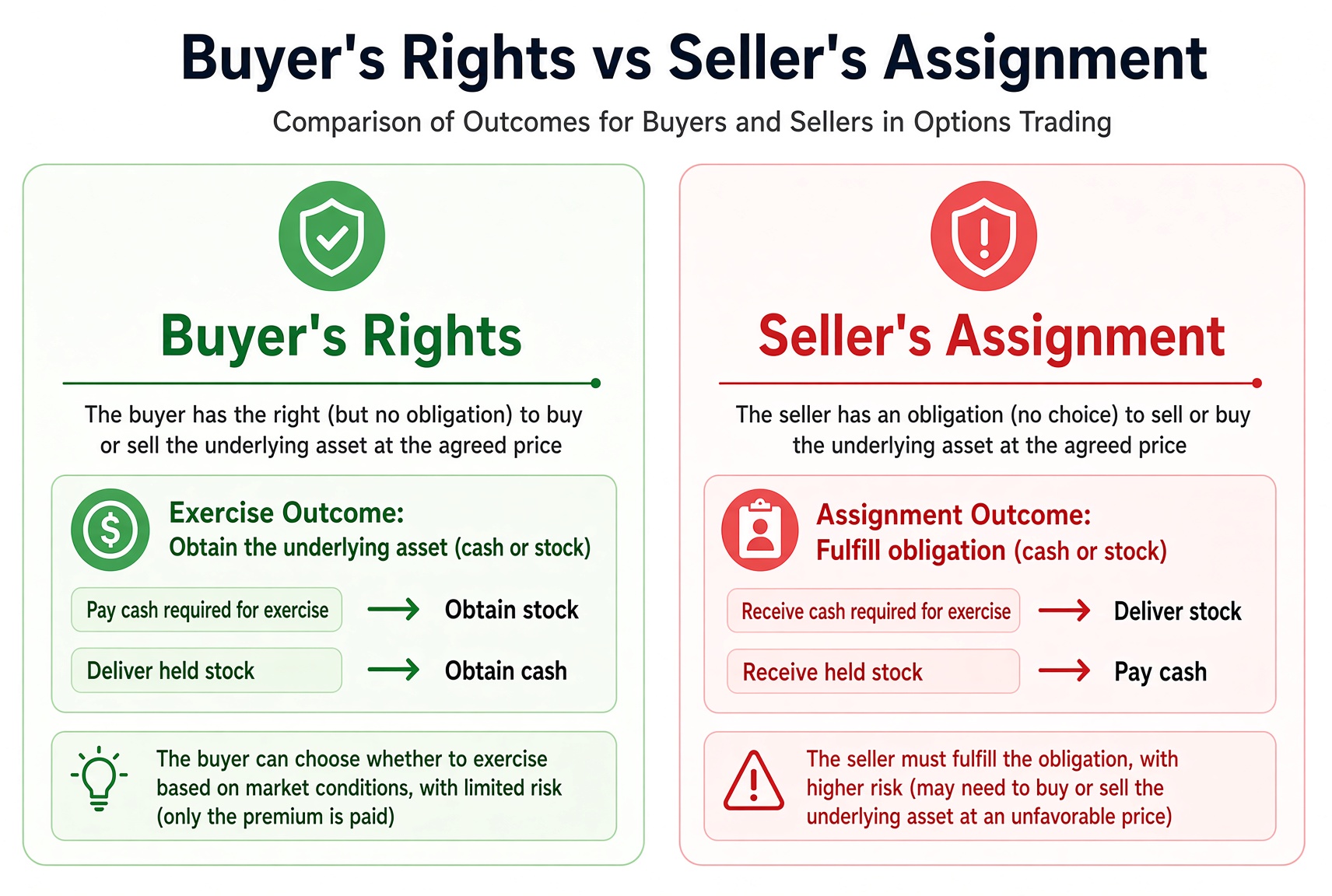
Assignment usually happens near expiry, but American-style options can theoretically be assigned early. The seller cannot opt out of “this one.”
Takeaway: The buyer pays for a right; the seller is paid to take a duty. On assignment you must buy or sell 100 shares at the strike.
American vs. European
You also need the two exercise calendars. Most single-stock options in the U.S. are American: the buyer can request exercise on any trading day before expiry. Many index options are European: exercise only on expiry day.
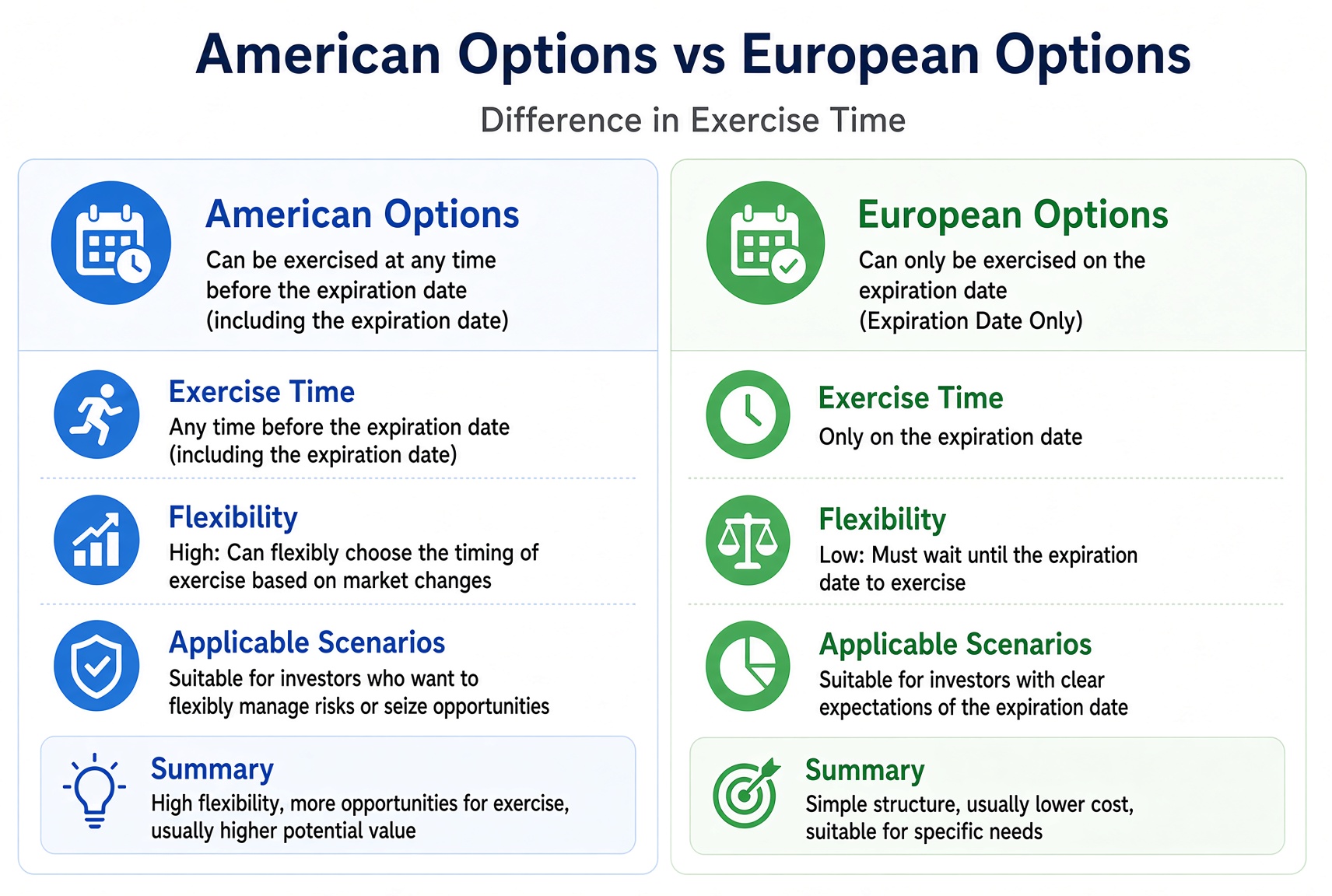
For a beginner, one line is enough: the Apple and Tesla stock options you see in software are American. Early assignment is possible in theory (even if it is uncommon).
Takeaway: U.S. equity options are American-style. Assignment can happen before expiry. Remember that first.
The pits beginners walk into
After the flow, these three blow up most often on expiry day:
Holding an ITM option to the last day without enough cash or shares, then auto-exercise dumps 100 shares into (or out of) the account.
Selling an option and forgetting it, then getting assigned and having cash or stock tied up.
Not knowing the auto-exercise rule and assuming “it just vanishes at expiry.”
Takeaway: If you do not want to be delivered stock, do not drag an ITM position to expiry. Sellers should keep the cash or shares needed to perform.
Wrap-up, next lesson on Delta
Before expiry, run this four-item check: is it ITM, do you have enough cash or shares, should you close early, and what is the auto-exercise rule.
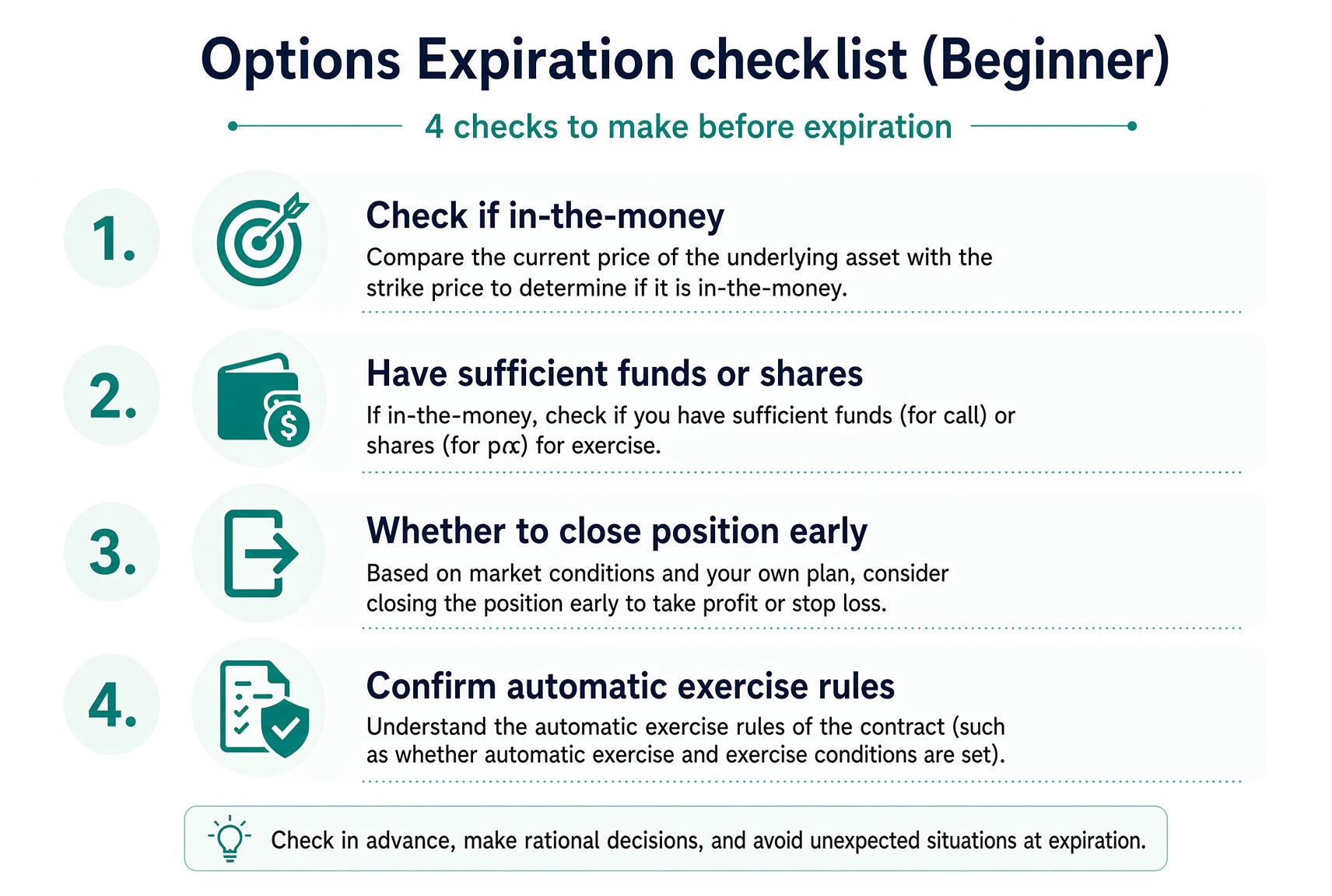
Practical advice:
If you are the buyer and you do not want stock, close the option yourself before expiry (sell it).
If you are the seller, make sure you have the cash or shares to handle assignment.
Expiry day itself (especially Friday) is when you watch your positions extra closely.
The one line to keep: Options do not “just vanish” at expiry. An ITM option can become a stock position, and a seller can be forced to perform.
With settlement clear, the next lesson is the number people use most in pricing: Delta. It tells you roughly how the option moves when the stock moves one dollar, and it also helps you guess the chance this contract finishes in the money.
Check these three first
Pass these three before the next lesson. You can skip.
1.Exercise and assignment are the two sides of the same event.
2.Equity options always cash-settle at expiry; you never touch the shares.
3.An in-the-money contract at expiry can be auto-exercised or assigned even if you did not click a button.