Theta: is time a friend or an enemy?
What you will learn
See how Theta puts a number on time decay, and why the buyer pays rent while the seller collects it
What Theta is
Delta in the last lesson answered “if the stock moves, how does the option move.” This lesson answers the other half: even if the stock does not move at all, why does the option still get cheaper?
Theta measures: holding other things equal, how much the option price falls each day.
If an option’s Theta is −0.05, then if the stock and volatility stay put, one more day knocks about $0.05 off the price. One contract is 100 shares, so about $5 evaporates.
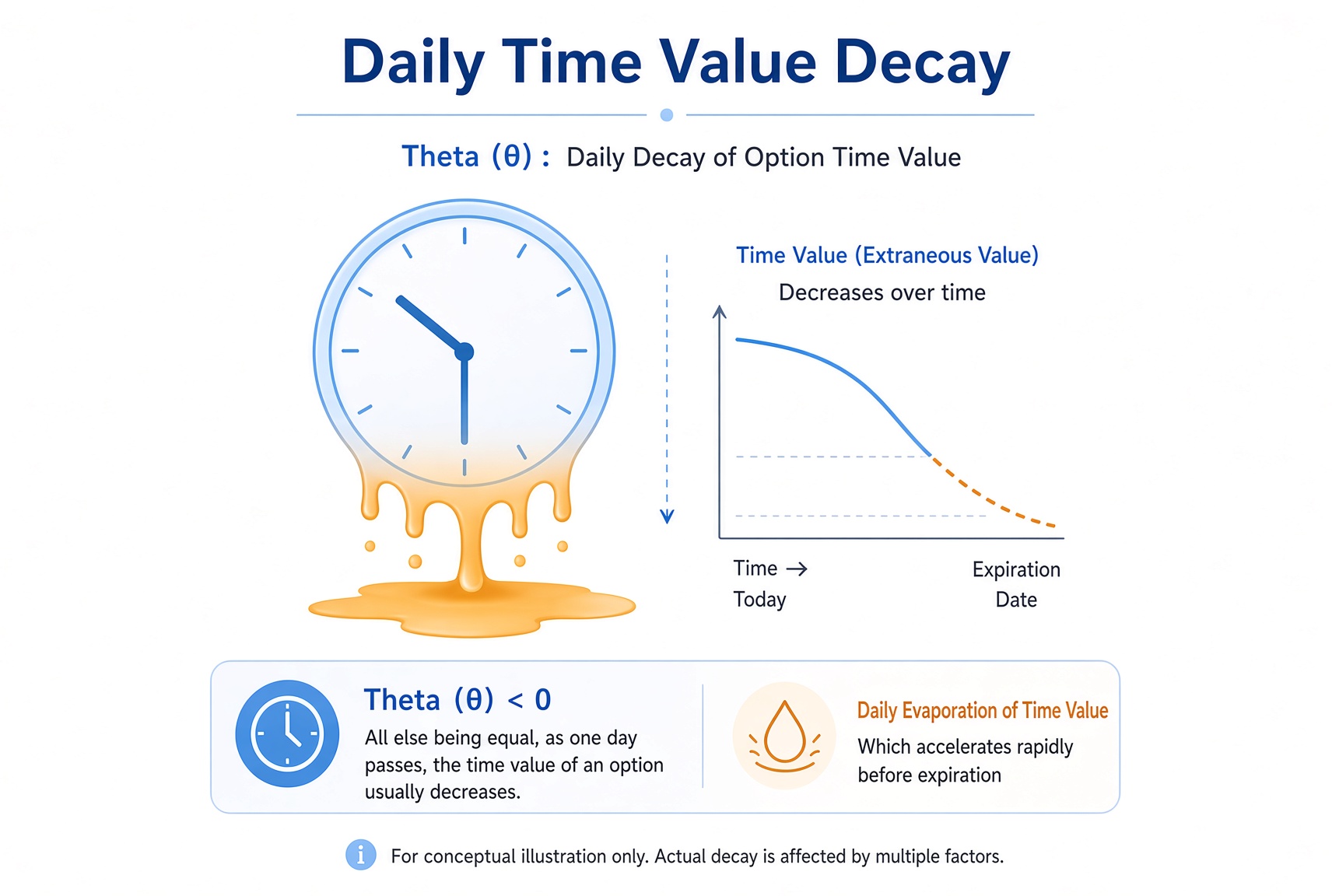
The buyer usually sees Theta as a negative number (time is eating the premium). On a short position, Theta is usually positive (time is paying you).
Takeaway: Theta is time decay as a number. The buyer is racing the clock; the seller is paid as it ticks.
Time decay is not linear
The closer you get to expiry, the larger Theta’s absolute value usually is. The last few weeks of time value fall especially fast.
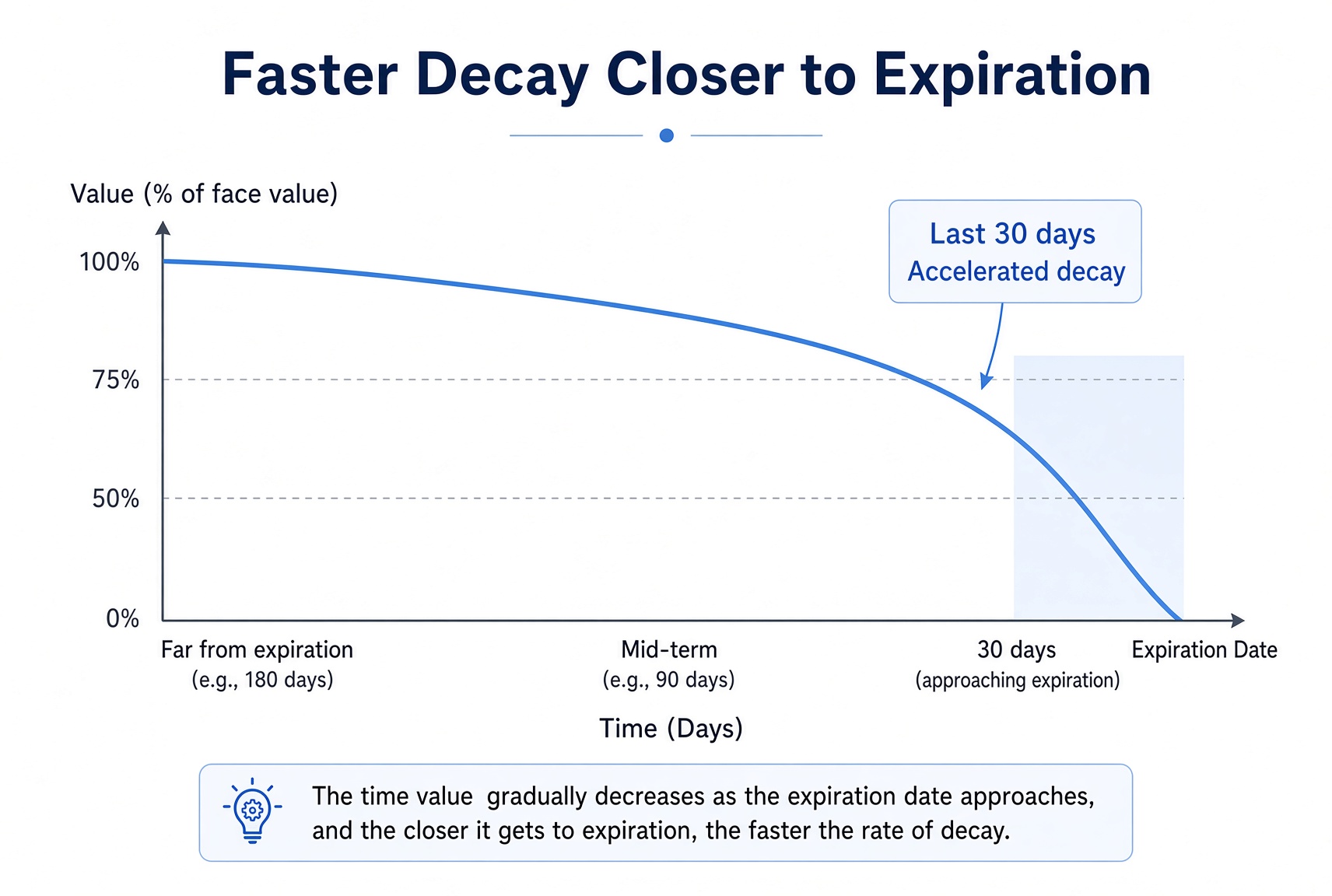
That is why many long strategies try to avoid very short-dated options — the time buffer is too thin, and there is little room for being a bit late on the move.
Takeaway: In the last 30 days the ice melts faster. Buyers in particular need to leave a window for the direction.
Buyers and sellers sit on opposite sides of time
Buyer: you pay every day for time passing. Even if the stock does not move, the option can still lose. So the buyer needs the stock to move their way soon enough to cover that cost.
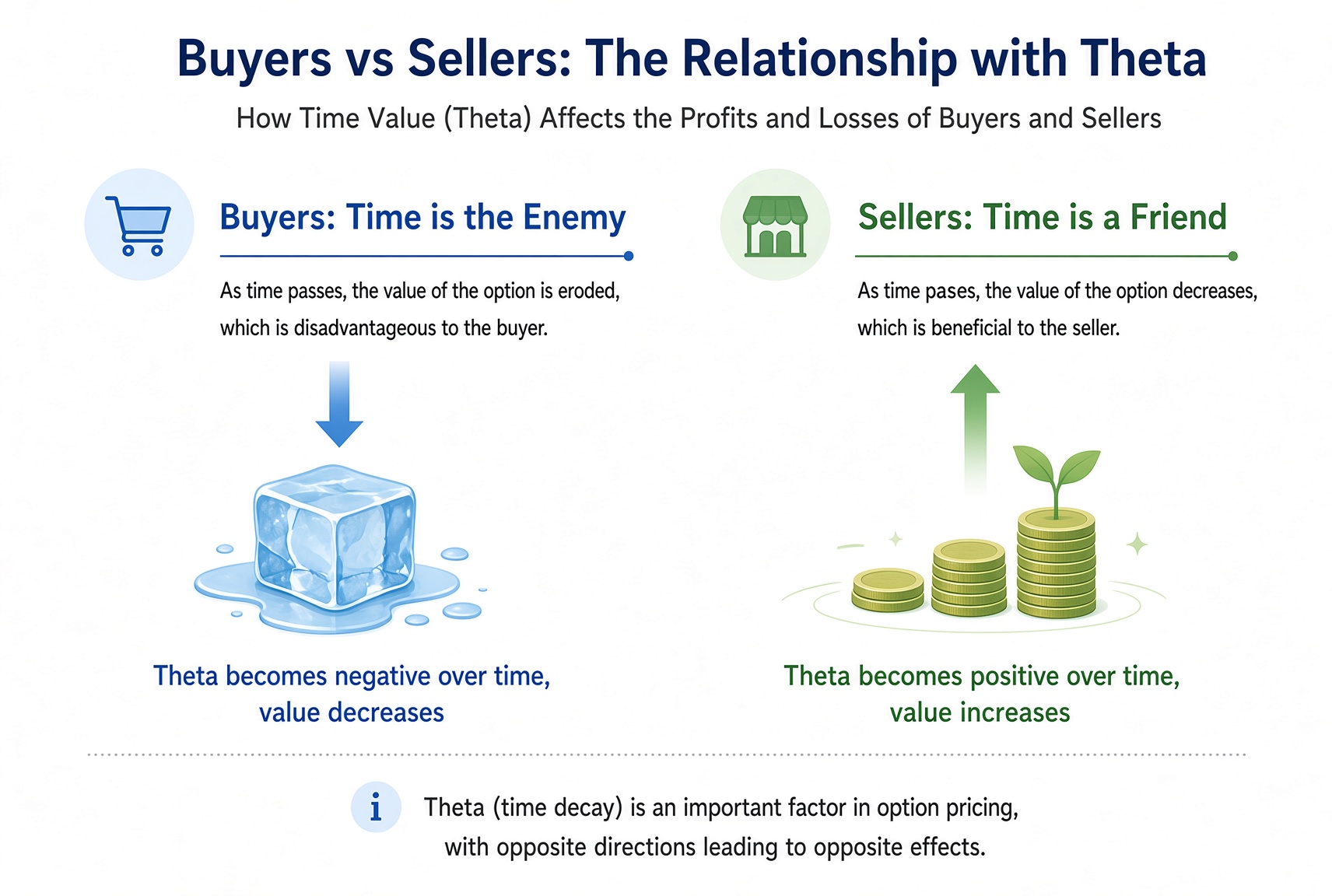
Seller: if the stock does not run hard against you, time decay becomes your profit. That is one of the core sources of “collecting rent” as a seller.
Takeaway: Time is the buyer’s enemy and the seller’s friend. Know which side you are on before you open the contract.
Practical notes for beginners
When you buy, leave enough time — 30 to 60 days or longer is a common choice.
When you sell, time decay is your friend, but you still have to manage direction risk.
Near expiry, OTM options’ time value heads to zero faster. Buyers should be extra careful.
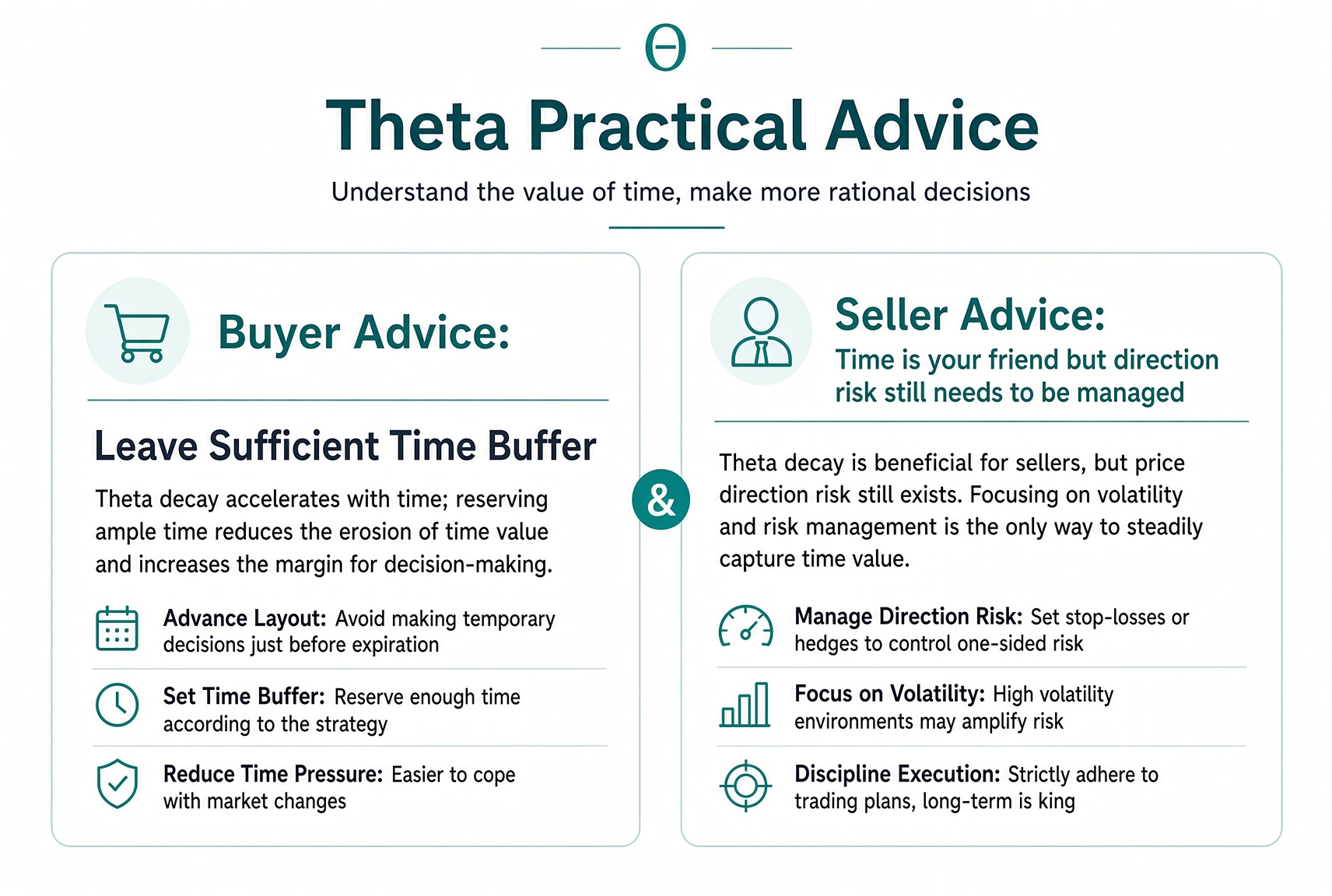
Takeaway: Time is a cost for the buyer and income for the seller. Theta is how you finally see why “right on direction” can still lose money.
Wrap-up, next lesson on Vega
Theta writes “the ice cube is melting” as a number you can see every day. Buyers pay rent daily; sellers collect it. The closer to expiry, the faster the melt.
Besides price and time, there is a third hand: implied volatility. It can make options violently more expensive or cheaper around earnings, even when the direction is exactly right. Next lesson: Vega and IV.
Check these three first
Pass these three before the next lesson. You can skip.
1.Theta measures how time passing eats the premium.
2.If you buy options, time is usually on your side.
3.The seller who collected premium often benefits as time passes.