Vega and implied volatility: the hidden hand behind big wins and big losses
What you will learn
See IV and Vega, and avoid IV crush after earnings — being right on direction and still losing
What implied volatility is
Many beginners hit the same frustration: the stock moved the way they thought, and the option still did not rise — or even lost money. One of the most common reasons is a change in implied volatility.
Stocks move every day. The market’s expectation of “how large future moves will be” is priced into the option. That expectation is implied volatility (IV).
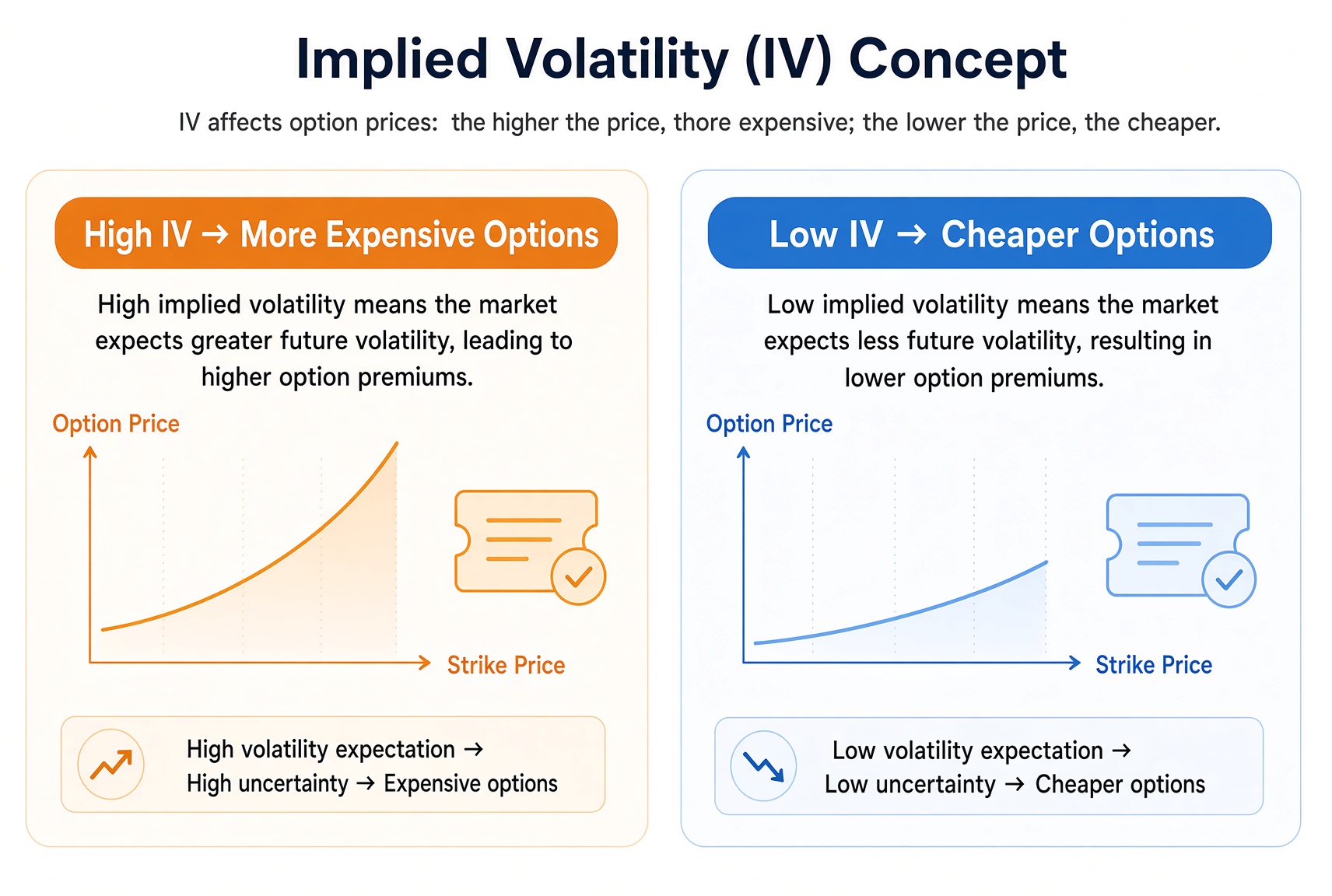
The market thinks the future will swing hard → IV is high → options are more expensive.
The market thinks the future will be quiet → IV is low → options are cheaper.
IV is not volatility that already happened. It is how scared or excited the market is about what comes next.
Takeaway: High IV makes premium more expensive; low IV makes it cheaper. First separate “moves that already happened” from “moves the market expects.”
What Vega is
Vega measures: for each 1% change in implied volatility, roughly how much the option price moves.
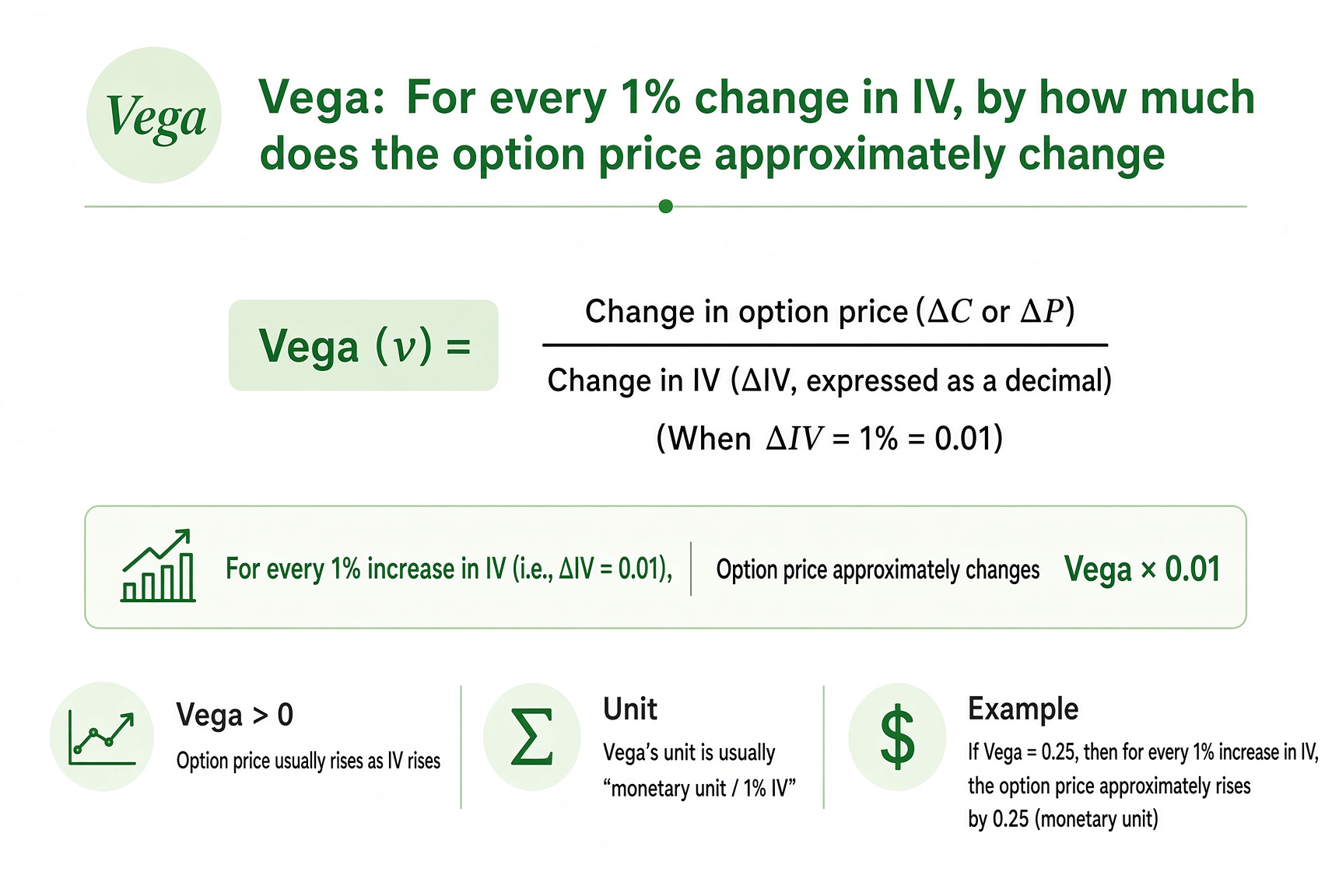
If an option’s Vega is 0.10, a 1% rise in IV lifts that option’s price by about $0.10. One contract is 100 shares, so about $10 per contract.
Buyers like IV rising (options get more expensive). Sellers like IV falling (options get cheaper). Vega is positive for both Calls and Puts: when expected volatility heats up, premium on both sides rises.
Takeaway: Vega writes “market mood” as sensitivity of the premium. IV moves one point, the option price moves with it.
The pit people walk into: IV crush
Before many companies report earnings, IV climbs, because the market does not know the result. Once the number is out — good or bad — the uncertainty is gone, and IV often drops fast. That drop is IV crush.
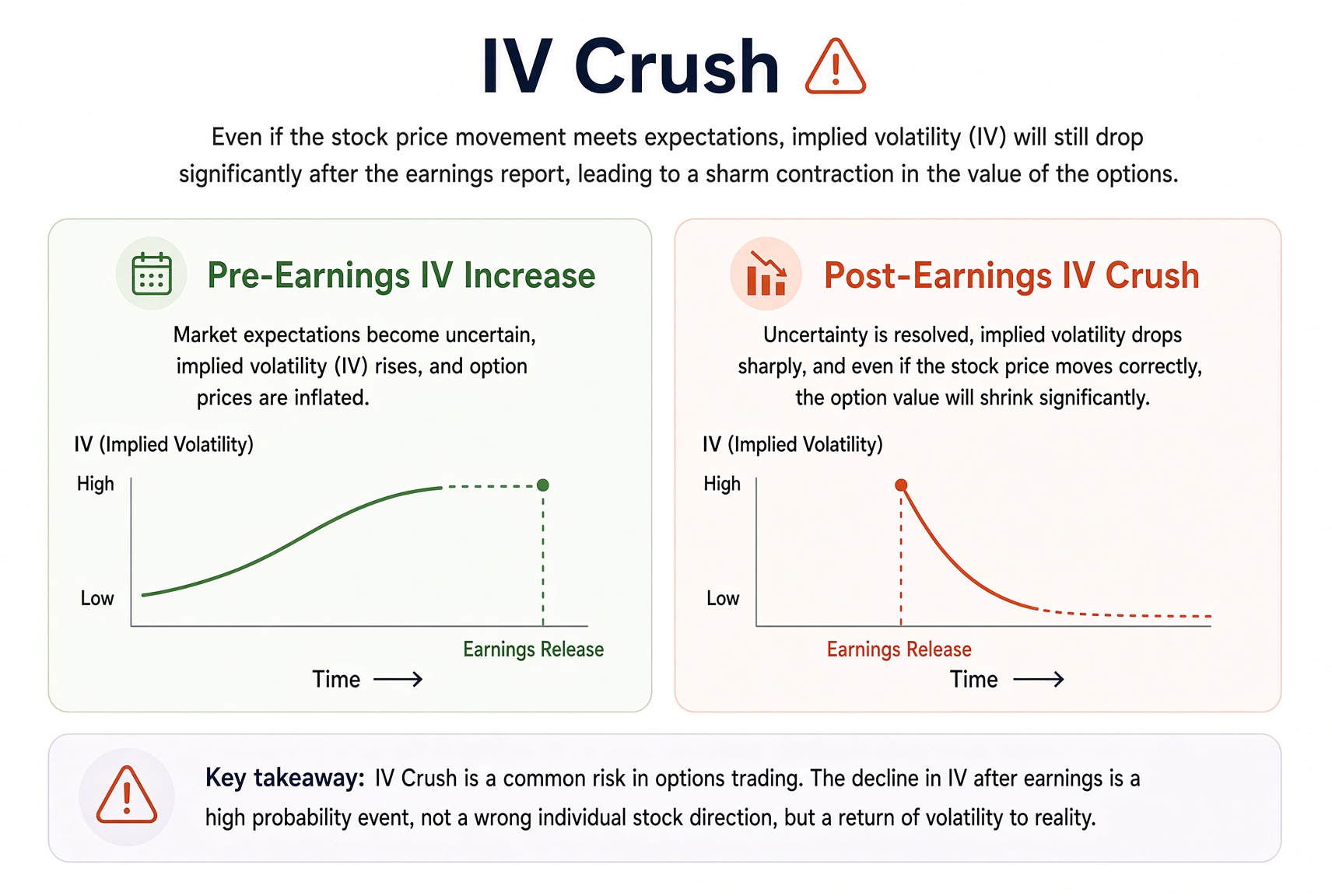
Even if your direction was exactly right — earnings beat, the stock rips — if IV falls hard enough, your Call may still not make money, or may lose.
That is a classic reason for “right on direction, still losing.”
Takeaway: Implied volatility is a major driver of option prices. Being right on direction is not enough; you also have to ask whether IV will work against you.
Three main drivers of the option price
By now, pricing is a system, not just “did the stock go up.”
Stock (Delta): the underlying moves, the option follows.
Time (Theta): even if the stock sits still, extrinsic value melts.
Volatility (Vega): if the market’s expectation changes, premium changes too.
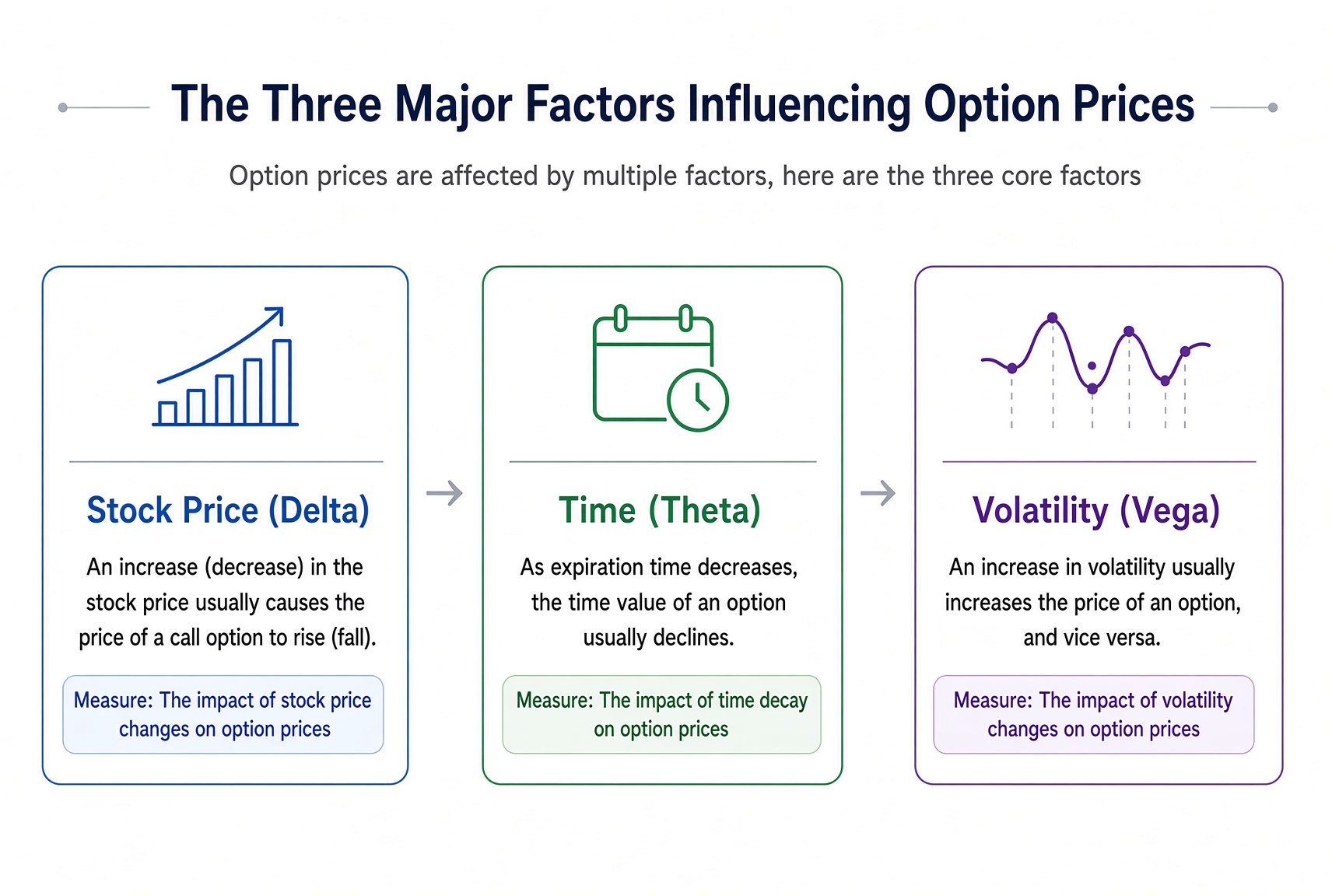
Understanding options means looking at them together.
Takeaway: Watching only direction leaves two hands out of the picture: time and volatility.
Wrap-up, next lesson on Gamma
Before you buy, look at whether this stock’s IV is relatively high.
Avoid blindly buying short-dated options into earnings unless you know exactly what you are doing.
Remember: option prices are driven by stock, time, and volatility — not the stock alone.
The one line to keep: Being right on direction is not enough. You also have to ask whether implied volatility will work against you.
Delta will change, Theta is eating, Vega answers to volatility. Next is the last major Greek: Gamma, which measures how fast Delta itself changes.
Check these three first
Pass these three before the next lesson. You can skip.
1.Vega measures how the option price moves when implied volatility moves.
2.If you get the direction right, a collapse in volatility cannot lose you money.
3.IV is often bid up before earnings, so long options get more expensive.