Covered Call: collect monthly rent on shares you already own
What you will learn
See the structure of a covered call, the three typical outcomes, and who it fits — and who it does not
What a Covered Call actually is
From this lesson we move into live strategies. The first is the classic Covered Call, the one that fits people who already hold the stock. In essence it is “own the shares + sell a Call,” and use time value to collect rent on a position you already have.
The simplest structure: hold 100 shares of a stock + sell 1 Call on that stock.
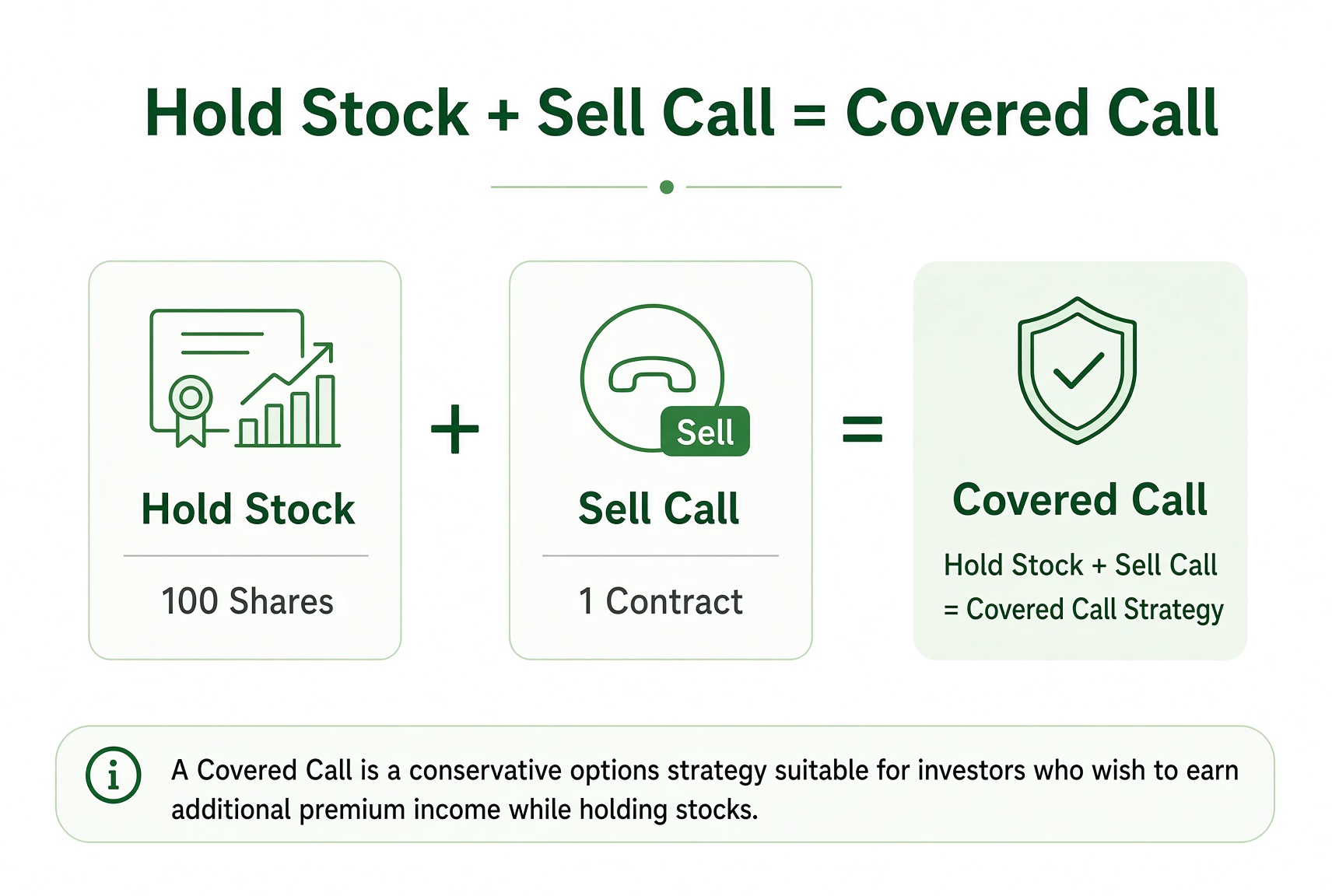
Because you already own the shares, the Call you sold is “covered.” It does not become a naked short. That is one of the seller strategies where risk is actually bounded.
Takeaway: Own the stock + sell a Call = Covered Call. The shares collateralize the seller’s duty.
Why you would do this
There is one core aim: earn premium income.
You already hold the stock. Selling the Call puts a premium in the account immediately. That cash can lower your cost basis, or you can treat it as extra “rent.”
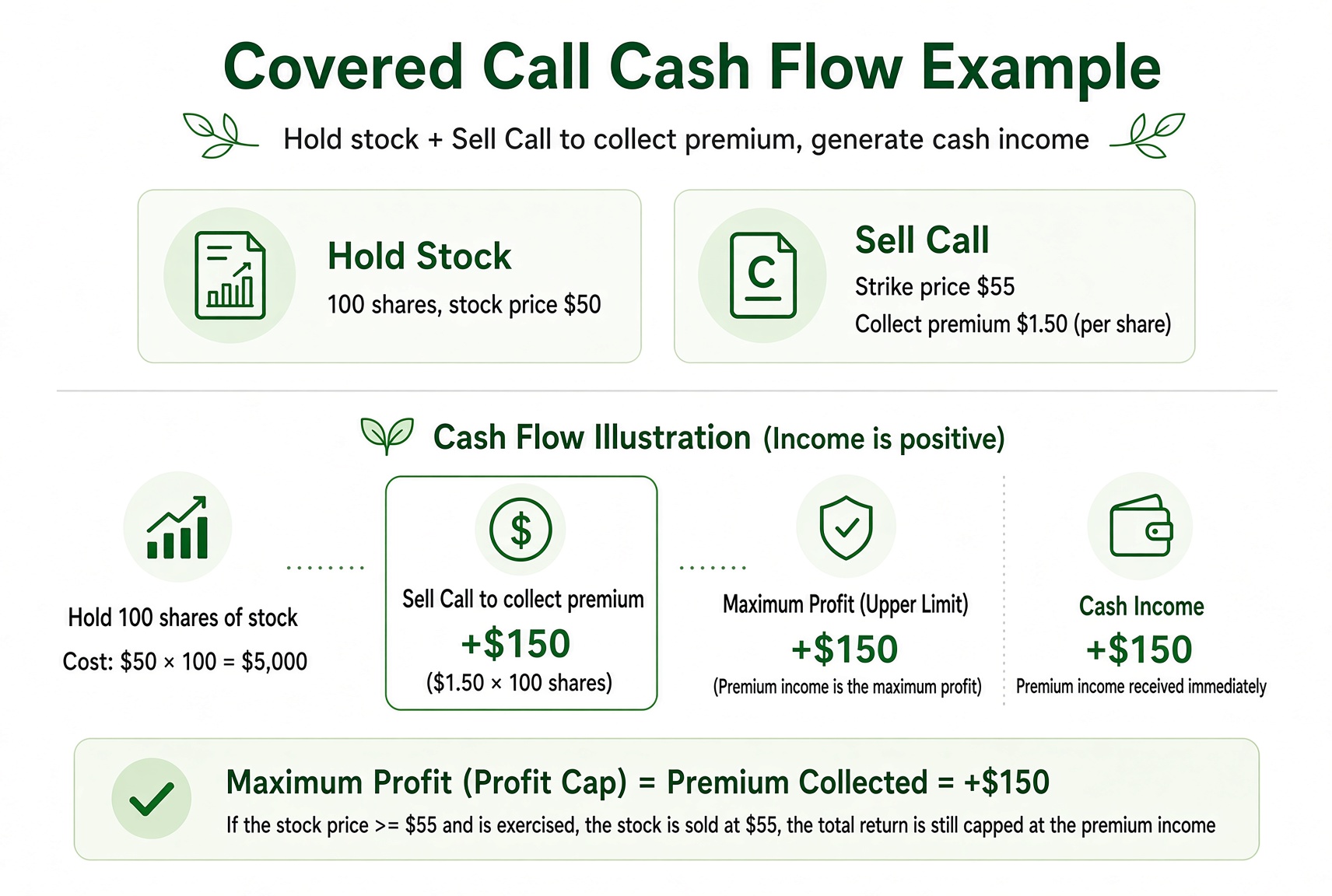
Takeaway: The premium you collect up front is the strategy’s core source of return.
Three typical outcomes
The stock is flat or up a little, and stays below the strike: the Call expires worthless. You keep the shares and the full premium. That is the best case.
The stock rips through the strike: the shares may be called away. You sell at the strike and still keep the premium. Upside is capped.
The stock falls: the premium cushions some of the drop, but not all of it. You still hold the shares and still eat the downside.
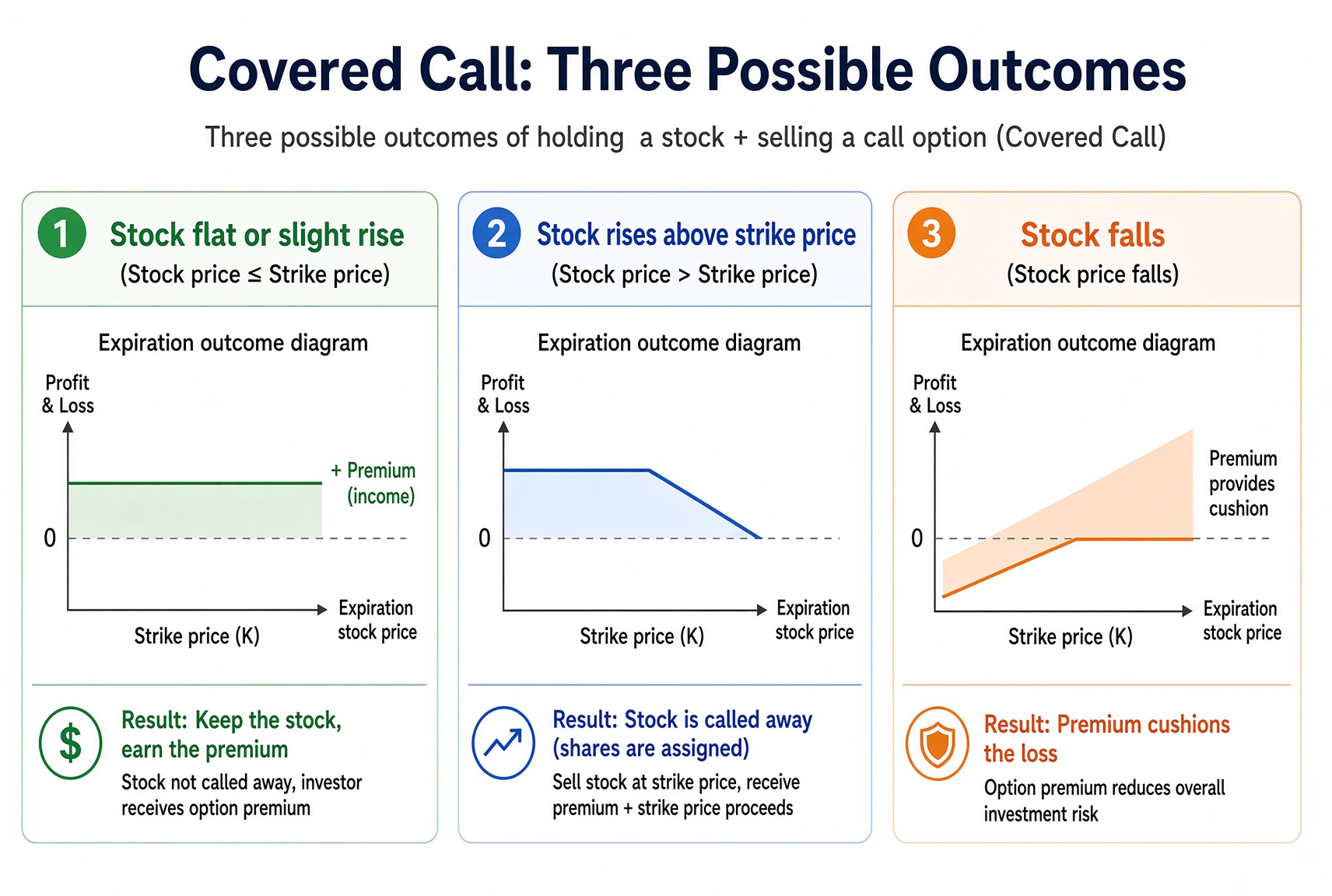
Takeaway: A Covered Call trades “some of the upside” for “a known premium.”
Who it fits, who it does not
Fits: people who already own the stock, who are neutral to mildly bullish, who are willing to sell at a set price, and who want extra cash flow.
Does not fit: people who are strongly bullish, who will not sell the shares at any price, or who want unlimited upside.
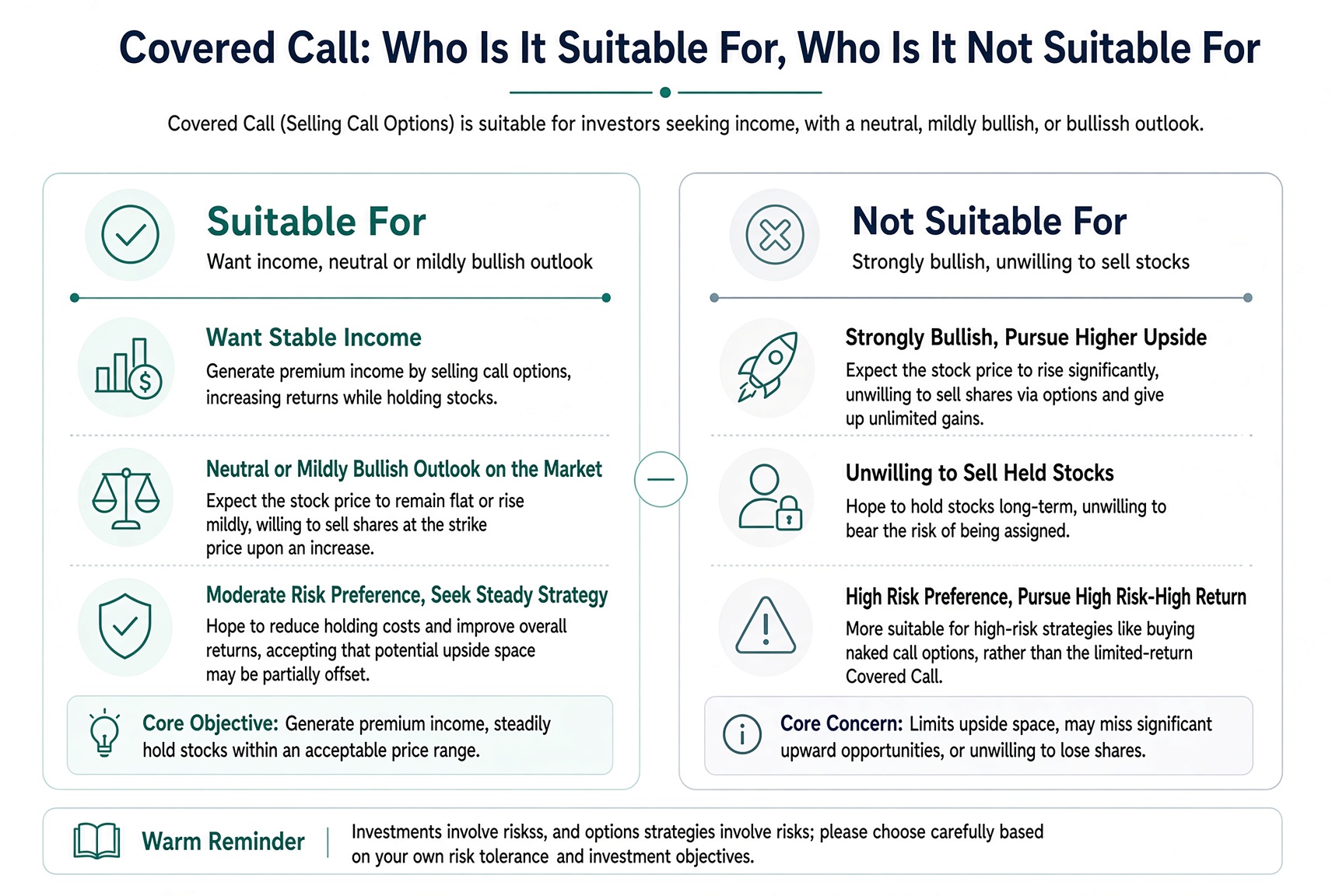
Takeaway: Neutral or mildly bullish, and looking for extra income: this is for you. Strongly bullish and unwilling to sell: skip it.
Wrap-up, next lesson sells a Put
Common beginner mistakes: expiry too close, not enough time buffer; strike too low, easy to get called early; selling a Call into earnings and walking into IV crush or a violent move; treating a Covered Call as “risk-free rent” and ignoring the downside.
The one line to keep: A Covered Call trades some of the upside for a steady premium. It fits people who hold the stock and want cash flow. It does not fit people who are strongly bullish and will not sell.
If you do not hold the stock yet, but you would like to buy it cheaper, the next lesson is the Cash-Secured Put.
Check these three first
Pass these three before the next lesson. You can skip.
1.A Covered Call assumes you already hold the matching shares.
2.If the stock drops hard, the shares leave your account and you only lose the premium.
3.If the stock rips higher, your upside is capped at the strike.