Cash-Secured Put: sell a Put to buy the stock cheaper
What you will learn
See the structure of a cash-secured Put, the three typical outcomes, and how it sits next to a Covered Call
What a Cash-Secured Put is
If you do not hold the stock yet, but you would like to buy it cheaper, the Cash-Secured Put is the other classic. In essence it is “set aside enough cash + sell a Put,” and use the premium to lower your effective purchase price.
The structure is simple: set aside enough cash to buy 100 shares + sell 1 Put on that stock.
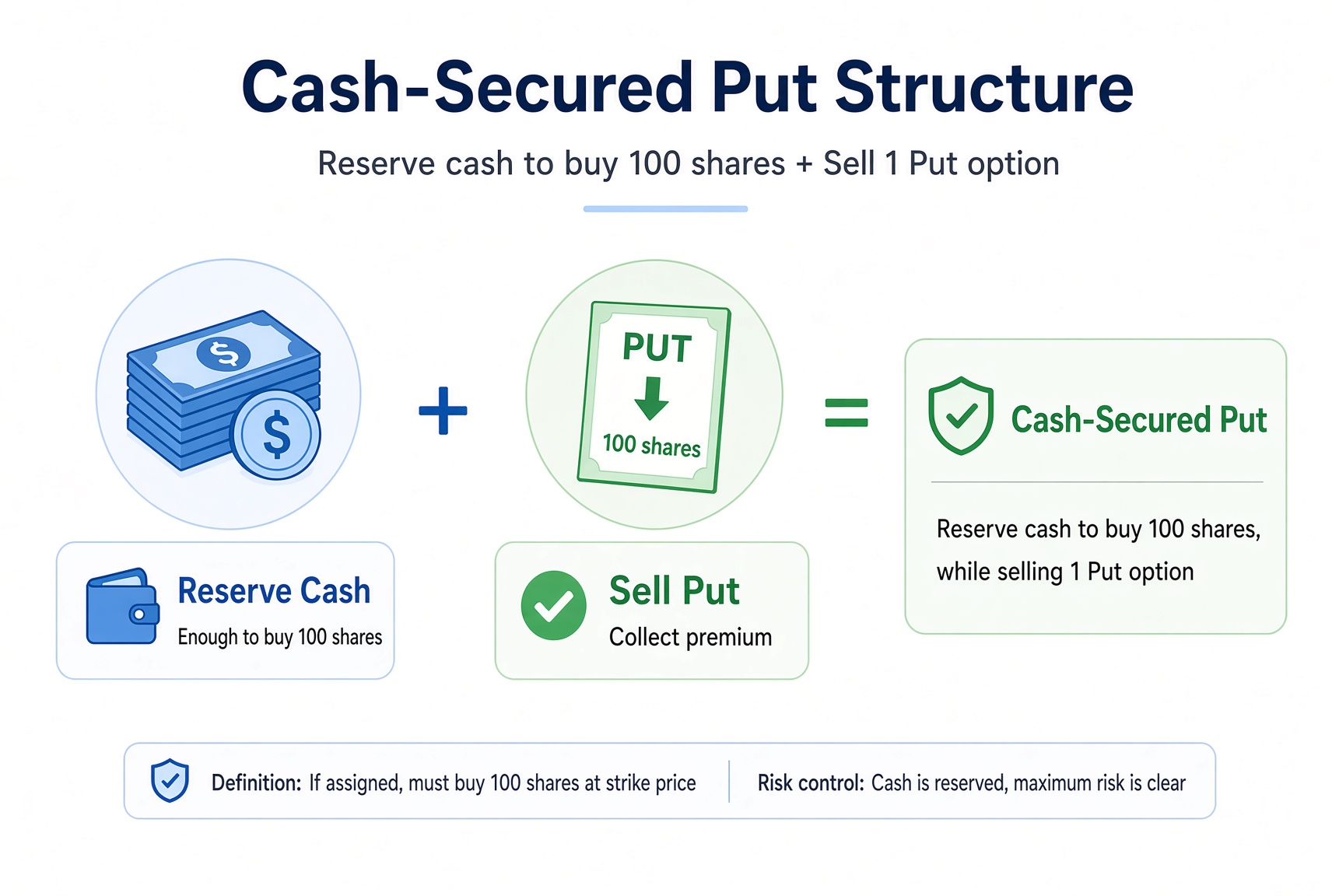
Because the cash is already reserved, the Put you sold is “secured.” It does not become a naked short. That is another seller strategy where risk is actually bounded.
Takeaway: Reserve the cash + sell a Put = Cash-Secured Put. The cash collateralizes the seller’s duty.
Why you would do this
There are two core aims: collect premium income immediately; and if you are assigned, buy the stock at a lower price you already accepted.
It is like posting a limit bid to buy cheaper, and collecting a deposit first. If you are assigned, effective cost = strike − premium.
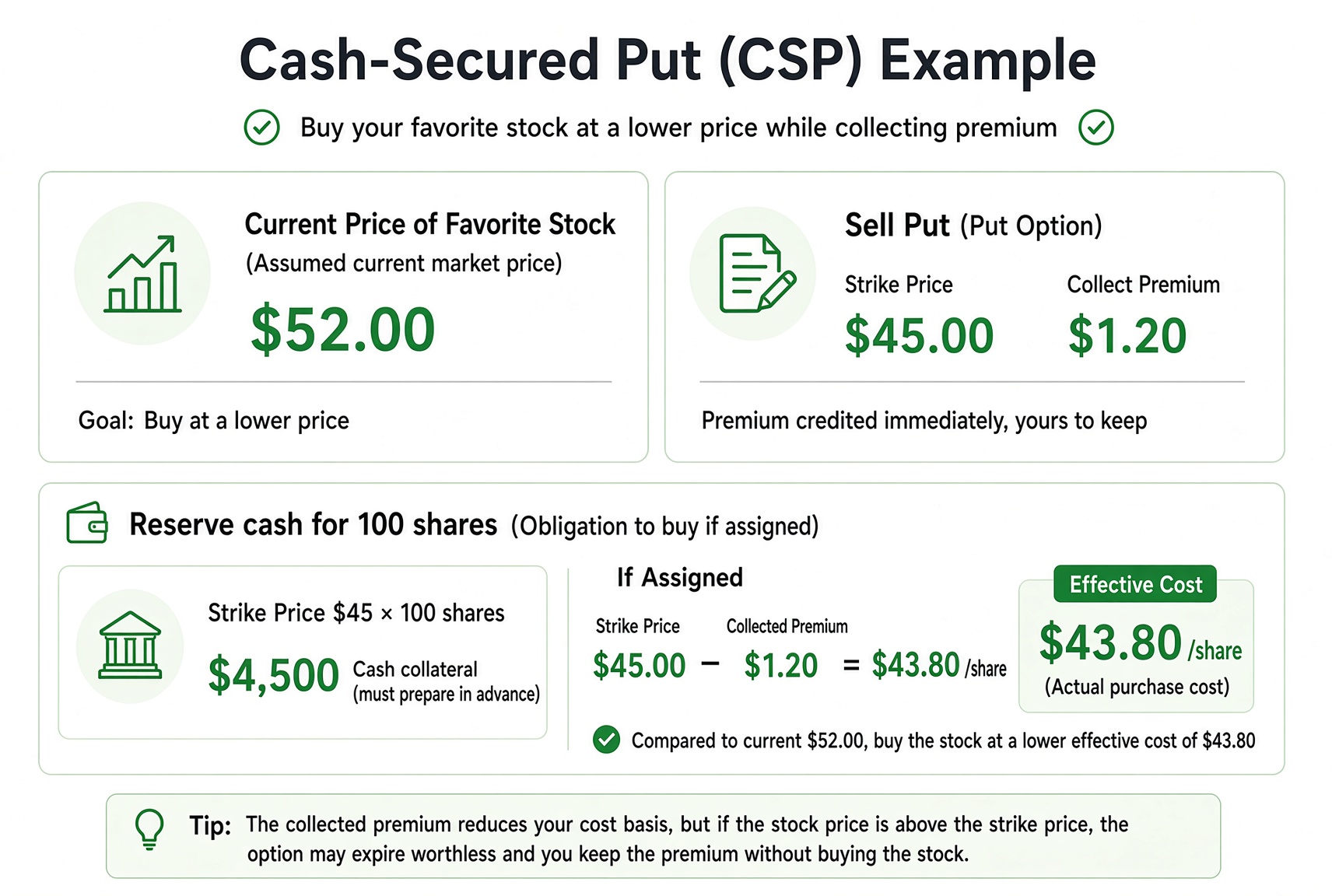
Takeaway: You collect a deposit. What you promised is: if it falls to the strike, you take the shares at that price.
Three typical outcomes
The stock stays above the strike: the Put expires worthless. You keep the full premium and do not have to buy the shares. That is the easiest result.
The stock breaks the strike: you may be assigned and buy 100 shares at the strike. Because you already collected premium, actual cost is below the strike.
The stock rallies: you also keep the premium and do not have to buy.
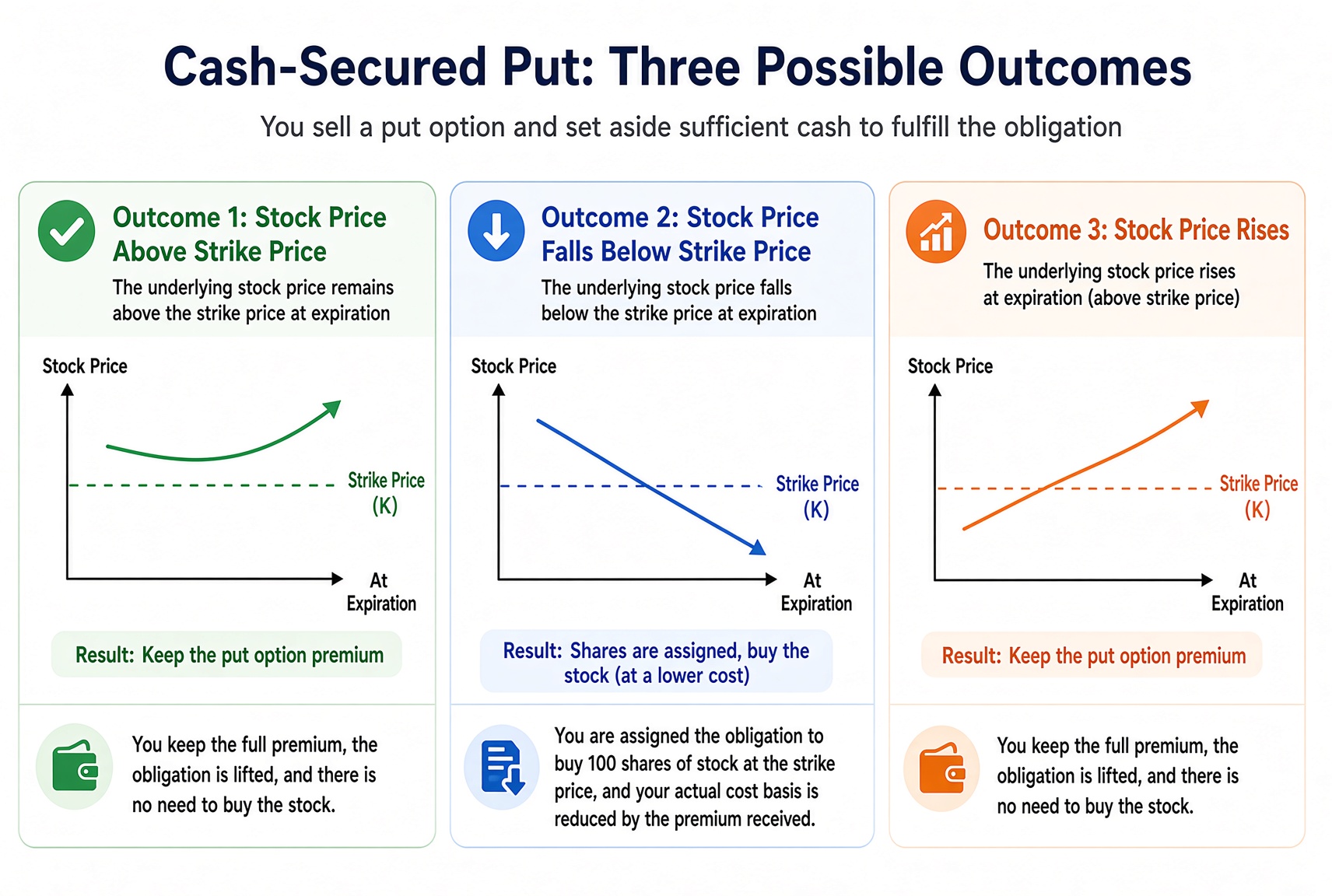
Takeaway: A Cash-Secured Put trades “I am willing to buy cheaper” for “a known premium.”
Side by side with the Covered Call
The two logics are very close; only the starting point differs:
Covered Call: you already have the stock, sell a Call, collect rent.
Cash-Secured Put: you have cash, sell a Put, collect rent, and you are willing to take the shares cheaper.
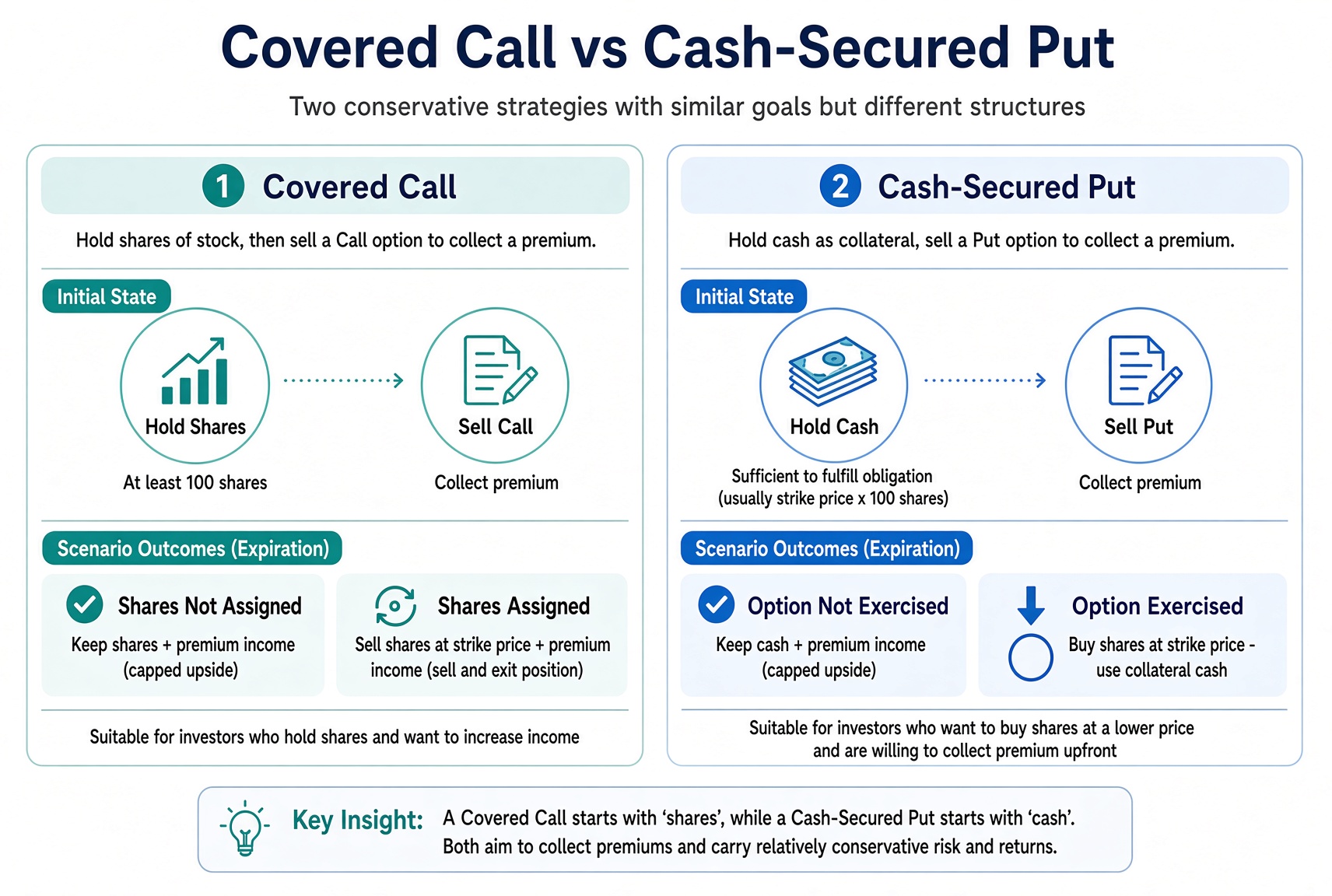
Takeaway: One starts from shares, one from cash. Both are trying to collect premium.
Wrap-up, next lesson strings them into the Wheel
You must actually be willing to buy this stock at the strike. If not, do not sell the Put.
The reserved cash is tied up. You cannot spend it freely.
If the stock drops hard, you do buy cheaper — and you can still show an unrealized loss on the shares.
When you pick strike and expiry, they have to match what you actually think of this stock.
The one line to keep: A Cash-Secured Put trades “I am willing to buy cheaper” for a known premium. It fits people who want to take the stock lower and collect time value while they wait.
After a Put assigns you the shares, you sell a Covered Call against them. After the shares are called away, you sell a Put again. The next lesson makes that loop explicit: the Wheel.
Check these three first
Pass these three before the next lesson. You can skip.
1.A Cash-Secured Put requires cash set aside to buy 100 shares.
2.The goal of selling a Put is to never be assigned the shares.
3.If assigned, you take the shares at a lower net cost.