How to pick expiry and strike
What you will learn
Use time to expiry and Delta to pick the contract; beginners can start at 30–45 days and 0.30–0.50 Delta
How to pick expiry
Whatever structure you run, two practical questions always show up: how far is expiry, and which strike? How long you leave until expiry directly changes how fast time decays and how much room you have to be a bit late.
Short (7–21 days): time decays fast, little room for error. Fits a clear short-term view.
Medium (30–45 days): a better balance, and the range beginners use most.
Long (60 days and up): more of a time buffer, but capital is tied up longer and liquidity is often thinner.
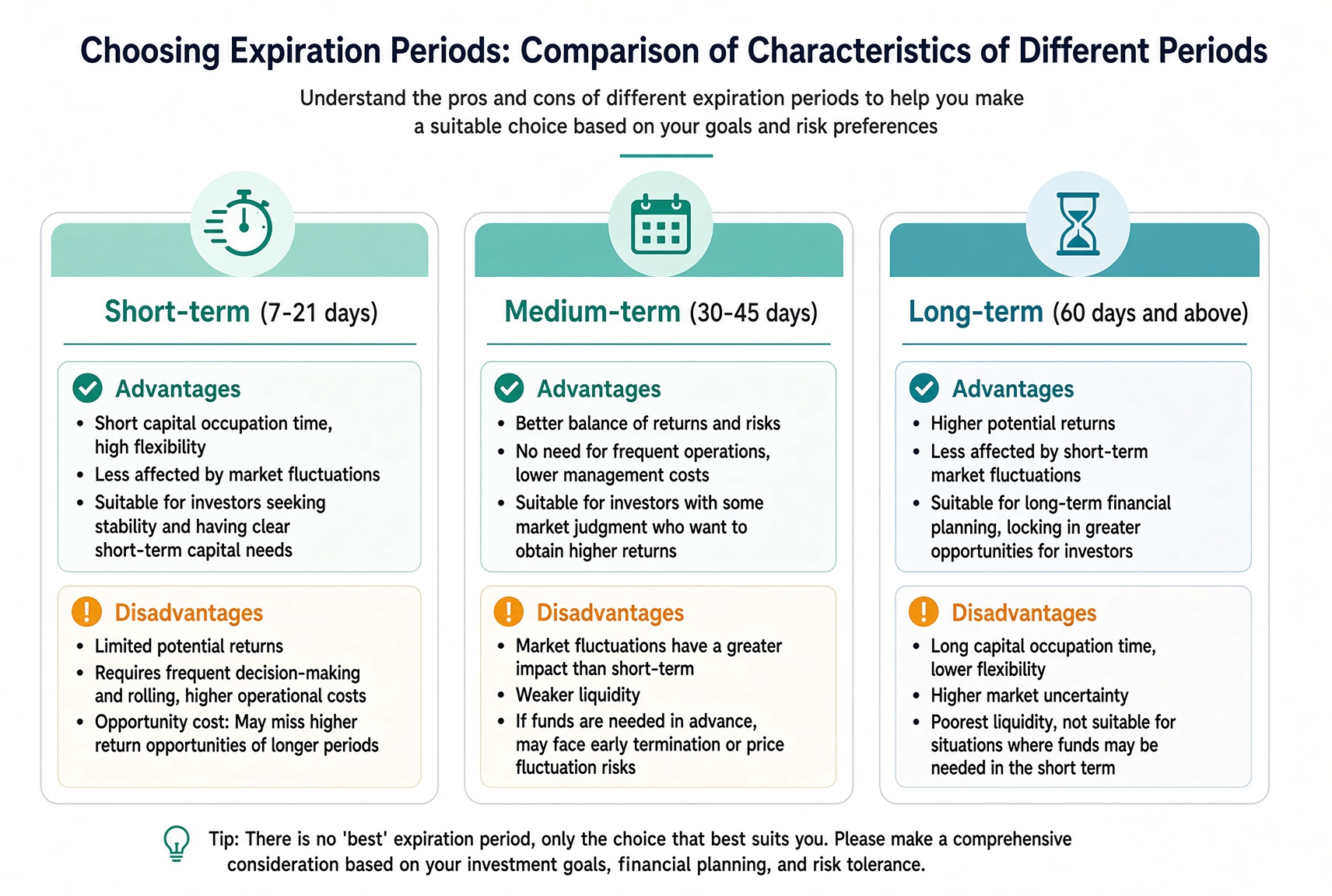
Takeaway: Short, medium, and long each have a trade-off. There is no single best. First ask how much time buffer you need.
How to pick strike: use Delta
Instead of memorizing “in the money / out of the money,” just look at Delta.
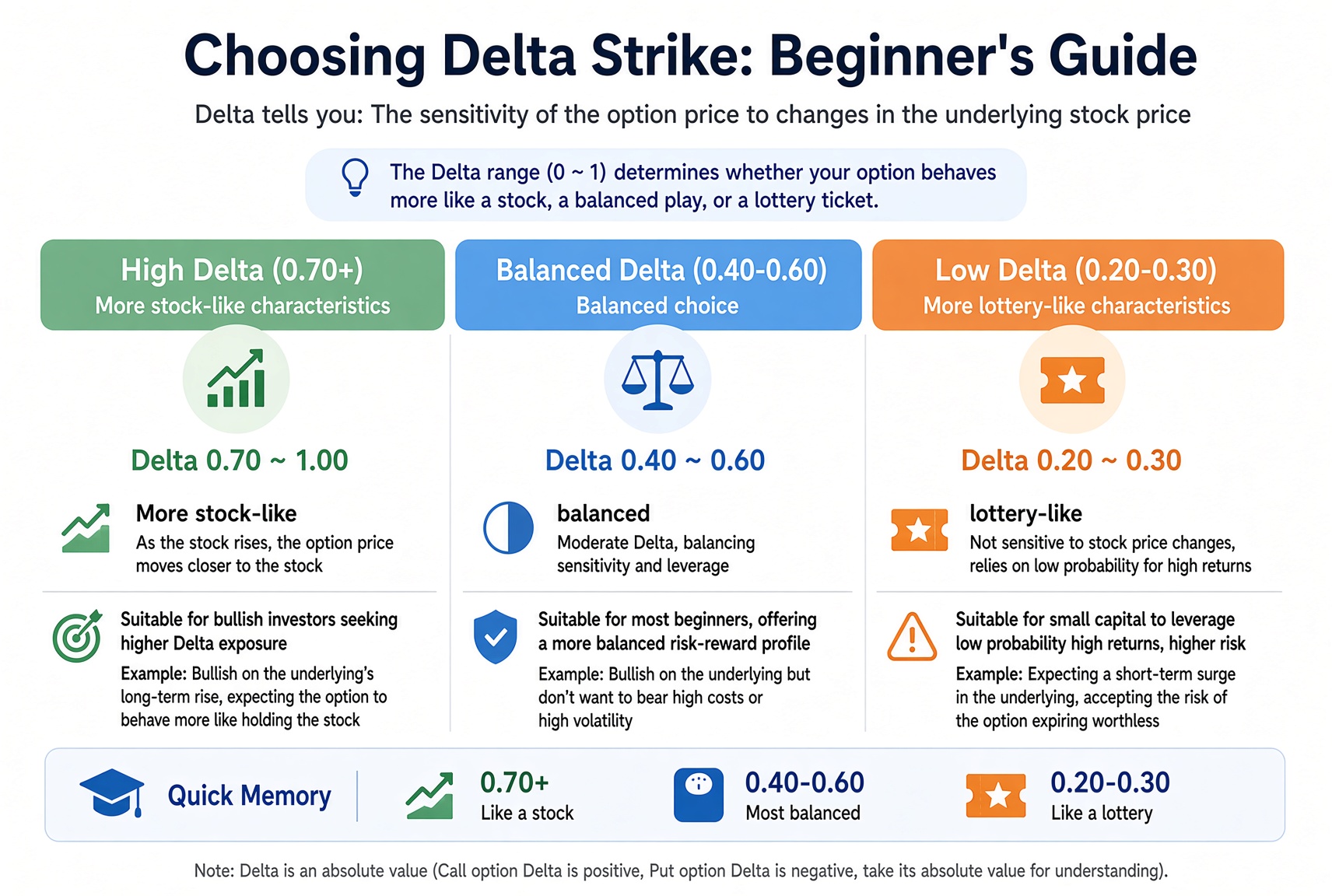
High Delta (0.70+): behaves closer to the stock, higher win rate, less leverage.
Mid Delta (0.40–0.60): a more balanced mix of risk and opportunity.
Low Delta (0.20–0.30): cheap, but closer to a lottery ticket.
Takeaway: High Delta is more like stock. Low Delta is more like a lottery. Pick probability first, then talk about cheap.
A practical rule of thumb for beginners
For most directional trades, start with 30–45 DTE + 0.30–0.50 Delta.
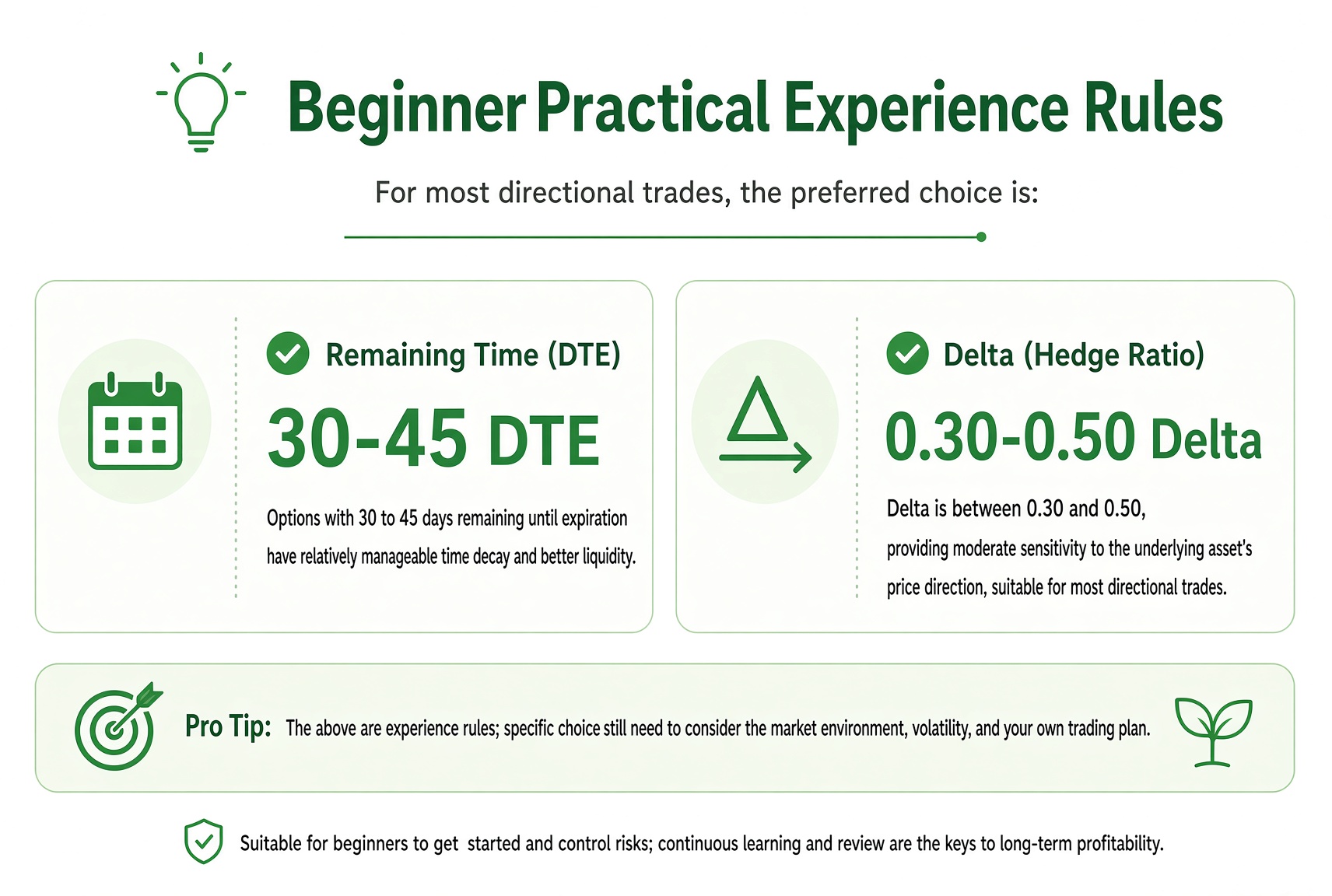
That is not a law. It is a relatively conservative starting point. You can still adjust it to your view and your risk tolerance.
Takeaway: First have a default you can actually execute, then tune it for the underlying and the structure.
Common mistakes
Expiry too short: time value evaporates faster, almost no room for error.
Strike too far out (Delta too low): over time, most of them go to zero.
Ignoring liquidity: a wide bid–ask makes getting in and out expensive.
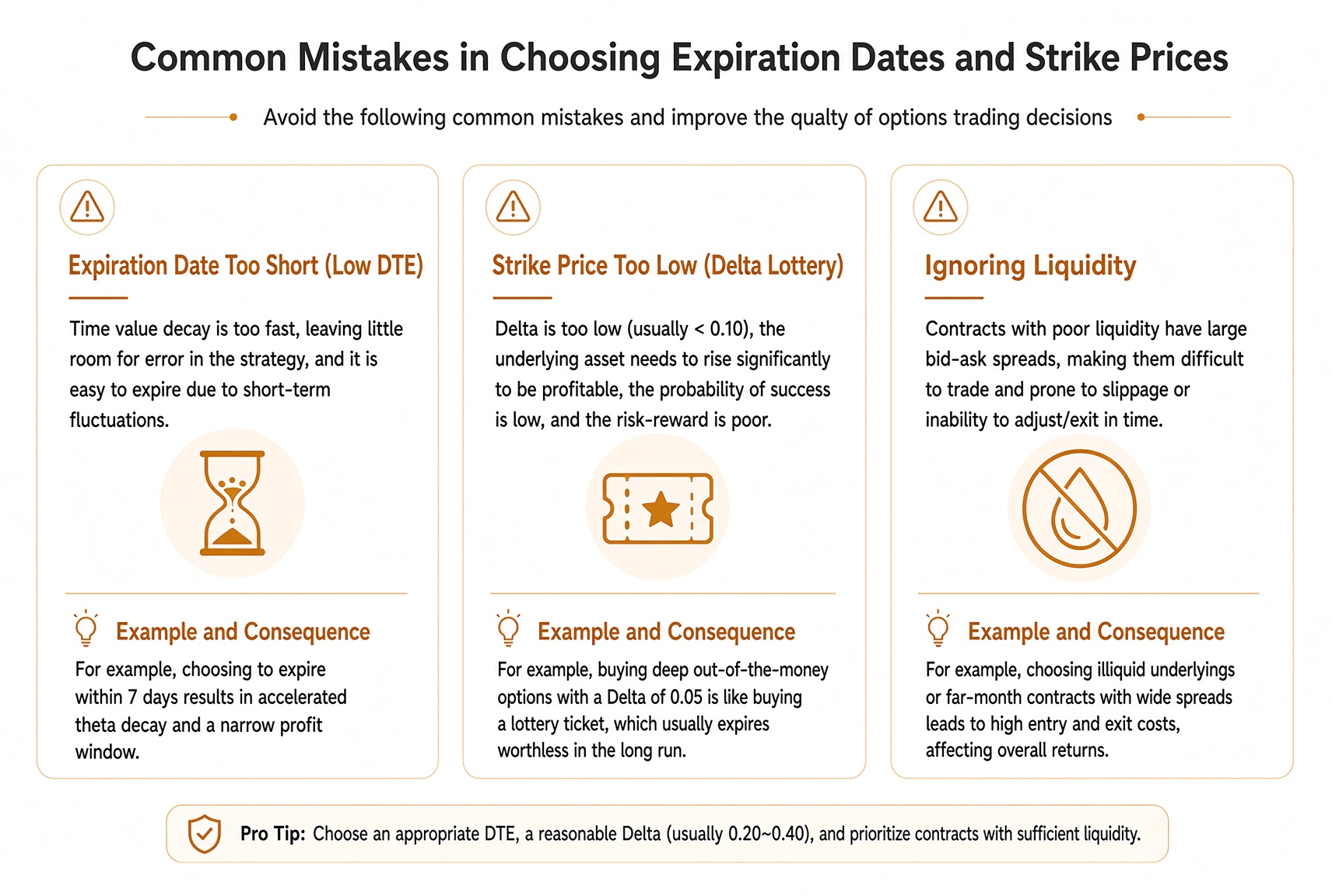
Takeaway: Avoid expiry that is too short, Delta that is too low, and ignoring liquidity.
Wrap-up, next lesson is the Covered Call
The one line to keep: Pick expiry by how much time buffer you need. Pick strike by how much probability and leverage you will take. Beginners can start at 30–45 days and 0.30–0.50 Delta.
From the next lesson we move into actual strategies. The first is the classic Covered Call, the one that fits people who already hold the stock: use the shares you have to collect rent.
Check these three first
Pass these three before the next lesson. You can skip.
1.You pick expiry by how much time buffer you want to leave yourself.
2.The safest place for a beginner to start is same-day expiry (0DTE).
3.Beginners can start strikes around 0.30–0.50 Delta and 30–45 days.