The Wheel: string Covered Call and CSP into one loop
What you will learn
See the two phases of the wheel, and only roll it on a stock you are willing to hold for a long time
What the Wheel is
After a Put assigns you the shares, you sell a Covered Call against them. After the shares are called away, you sell a Put again. Loop those two strategies and you have the Wheel.
In essence it is Cash-Secured Put and Covered Call strung into a continuous cycle: sell a Put → get assigned the stock → sell a Covered Call → shares called away → sell a Put again.
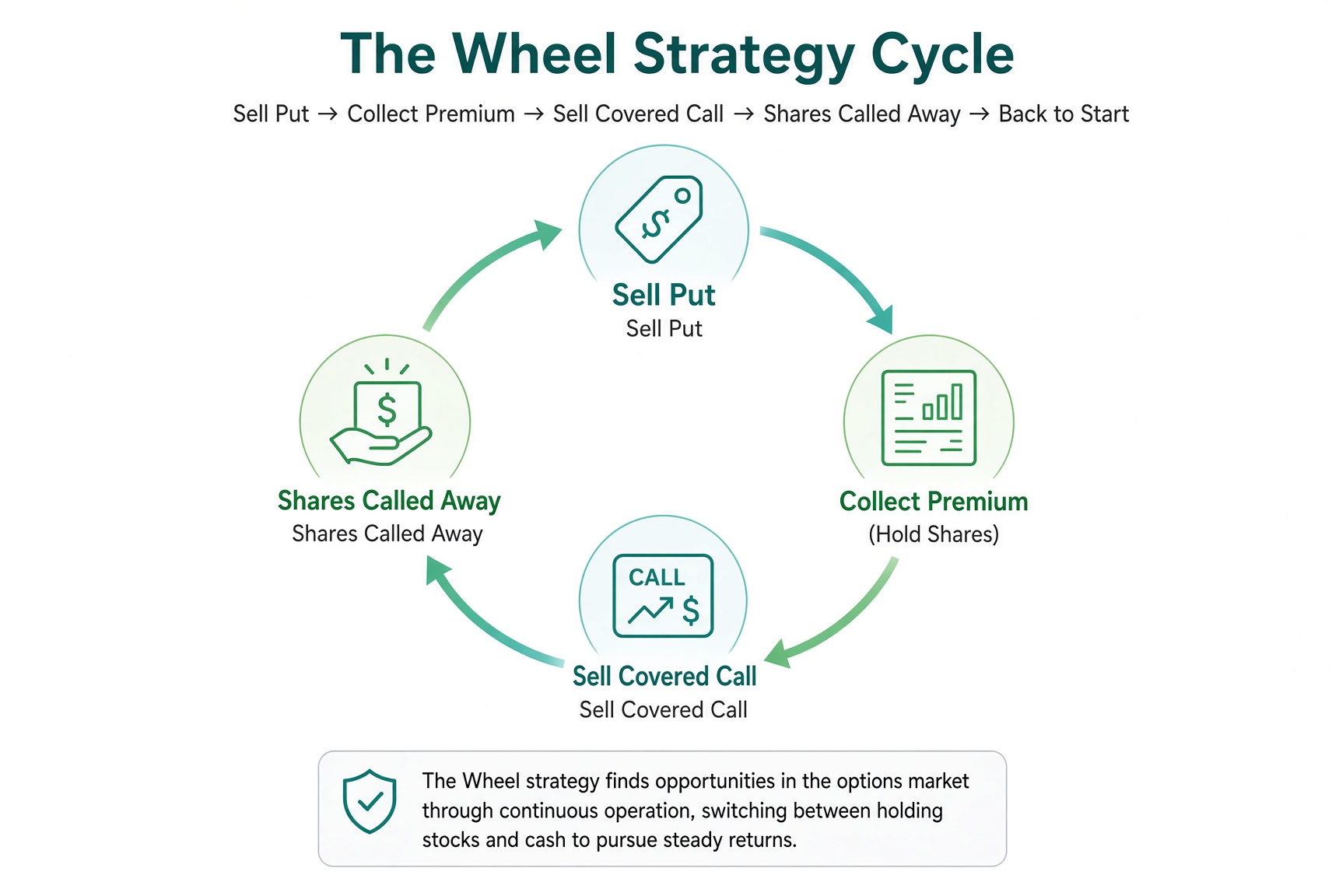
The aim is not a single home run. It is to keep collecting premium by selling options, while rotating on a stock you actually want to own.
Takeaway: The Wheel is not a new strategy. It is the last two lessons closed into a loop.
Two phases
Phase one: Cash-Secured Put. You have cash, you sell a Put. If you are not assigned, you keep collecting premium. If you are assigned, you buy at the strike and enter phase two.
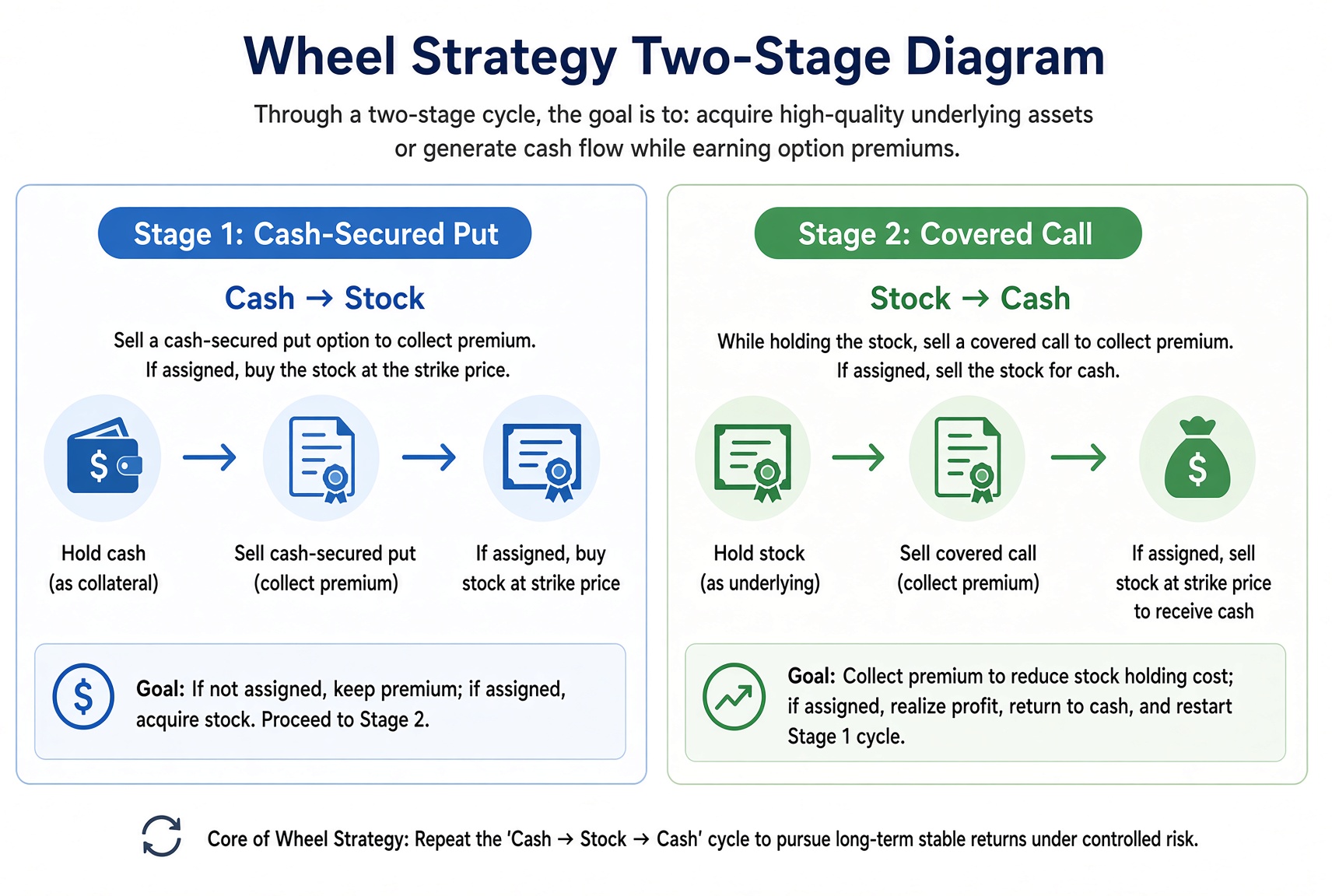
Phase two: Covered Call. You hold the shares, you sell a Call. If it is not exercised, you keep collecting premium. If it is exercised, the shares are called away, cash comes back, and you return to phase one.
Takeaway: Phase one trades cash for shares. Phase two trades shares back for cash. What rotates is one underlying you are willing to own.
Where the return comes from
Premium from selling Puts.
Premium from selling Calls.
If the stock has rallied when it is called away, there may also be a capital gain.
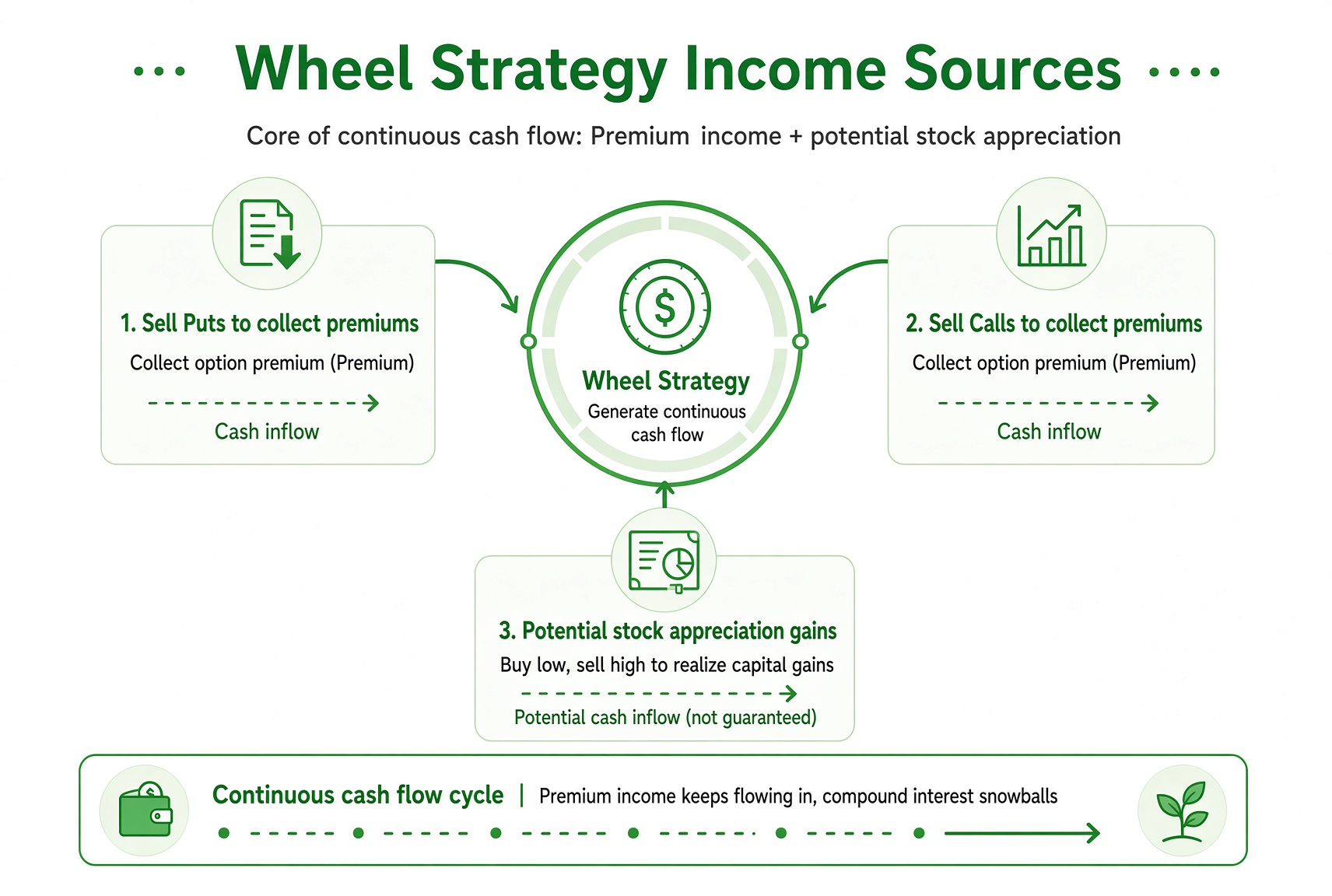
The core logic: keep producing cash flow from time value, and only do it on a name you are willing to hold.
Takeaway: Premium is the main source. A stock-price gap is extra, not something you get every time.
The warnings that matter
Only pick a stock you are willing to hold for a long time. After assignment you will actually own it. If you dislike the name, the Wheel becomes a burden.
Manage assignment risk. Near expiry or before a major event, decide in advance whether you still want the shares or need to adjust.
Do not chase the fattest premium. High premium usually comes with high volatility or high risk. Quality and a margin of safety matter more.
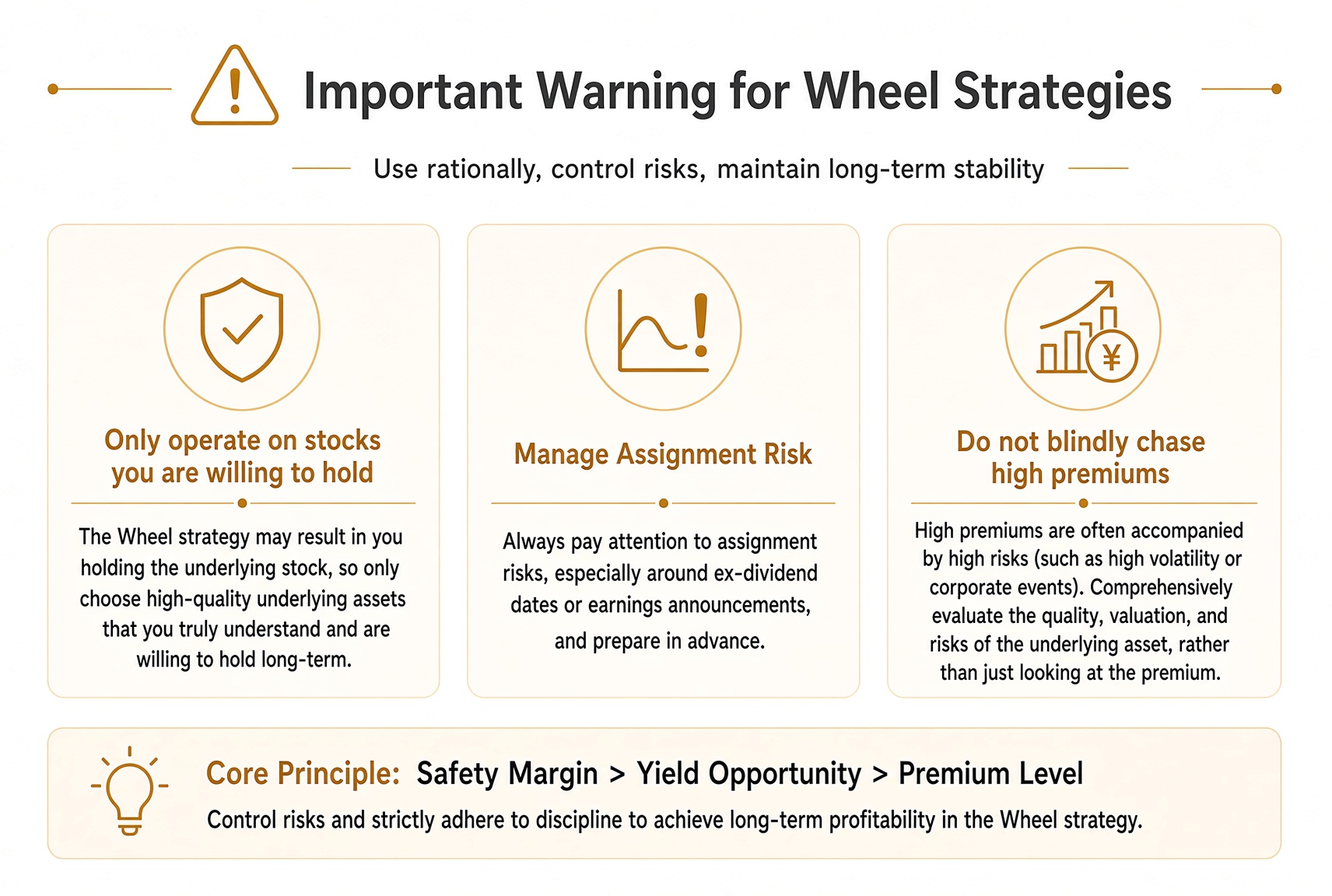
The one line to keep: The Wheel strings “sell a Put to take shares” and “sell a Call to collect rent” into a loop. It fits people willing to work a quality name for a long time and collect a steady premium.
Wrap-up, next lesson is vertical spreads
The last three lessons were single-leg selling: sell a Call if you have shares, sell a Put if you have cash, then spin the two together.
From the next lesson we move into multi-leg structures. Vertical spreads are the most basic, and one of the most useful: they pin risk inside a known range.
Check these three first
Pass these three before the next lesson. You can skip.
1.The Wheel is the loop of selling a Put to take shares, then selling a Covered Call.
2.In the Wheel loop you never hold the stock in the account.
3.After shares are called away, you usually go back to selling a Put.