Vertical spreads: take a directional view with defined risk
What you will learn
See bull and bear vertical spreads, and how debit and credit spreads cap the risk
Why use a spread
Everything so far was single-leg. From this lesson we move into multi-leg structures. The vertical spread is the most basic, and one of the most useful.
Buy one Call or Put on its own and the max loss is the whole premium. If your directional view is not that strong, or you want to cut the cost, you can buy one and sell one at the same time — and cap both the risk and the payoff.
Takeaway: A vertical spread’s core is trading defined risk for a more controllable payoff shape.
The bullish vertical
A Bull Call Spread: buy a Call at a lower strike + sell a Call at a higher strike, same expiry.
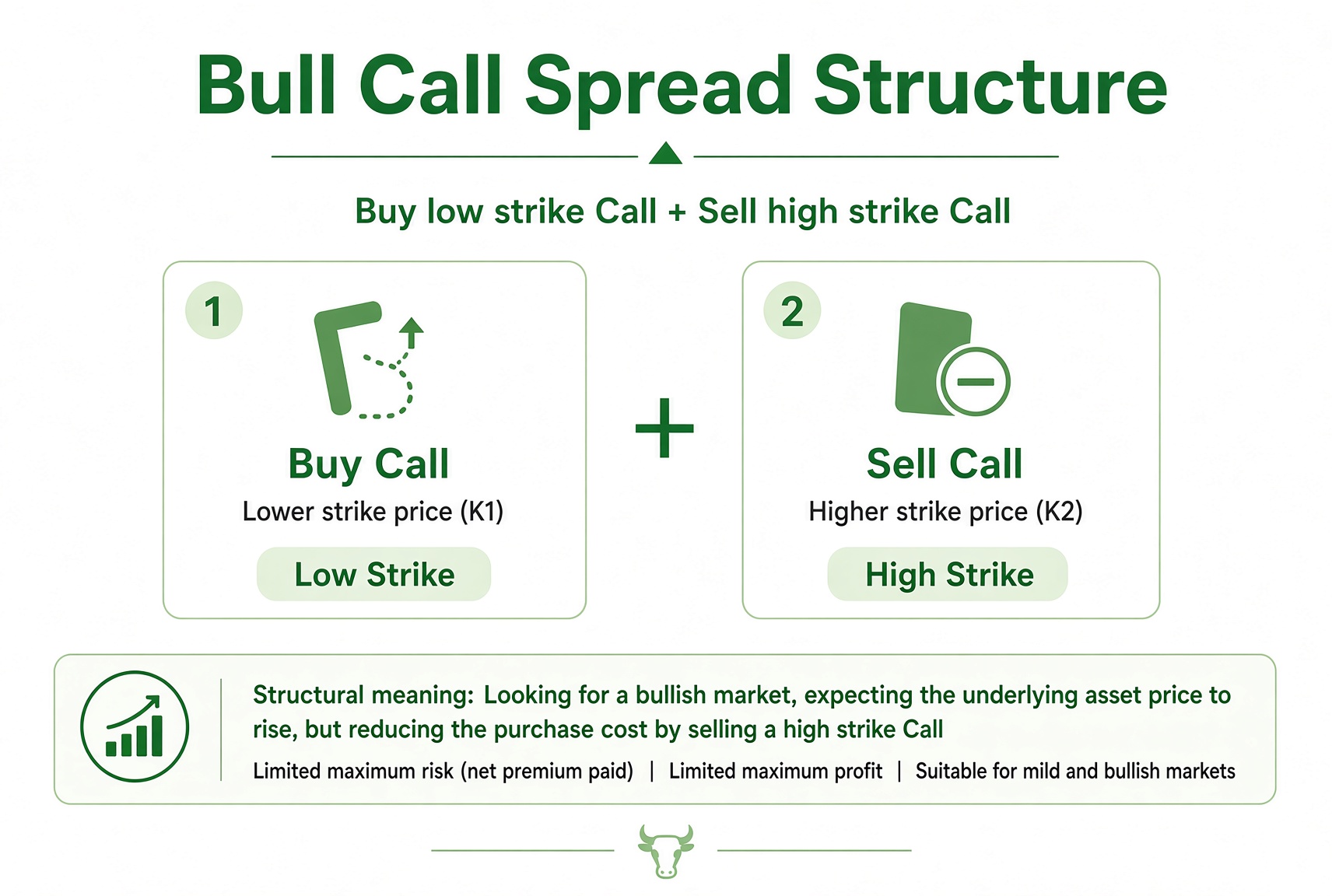
You pay a net premium (a debit) and want the stock to rise. Both the max gain and the max loss are limited.
Takeaway: Buy the lower-strike Call, sell the higher-strike Call. You pay to be bullish; the short leg caps the rally.
The bearish vertical
A Bear Put Spread: buy a Put at a higher strike + sell a Put at a lower strike.
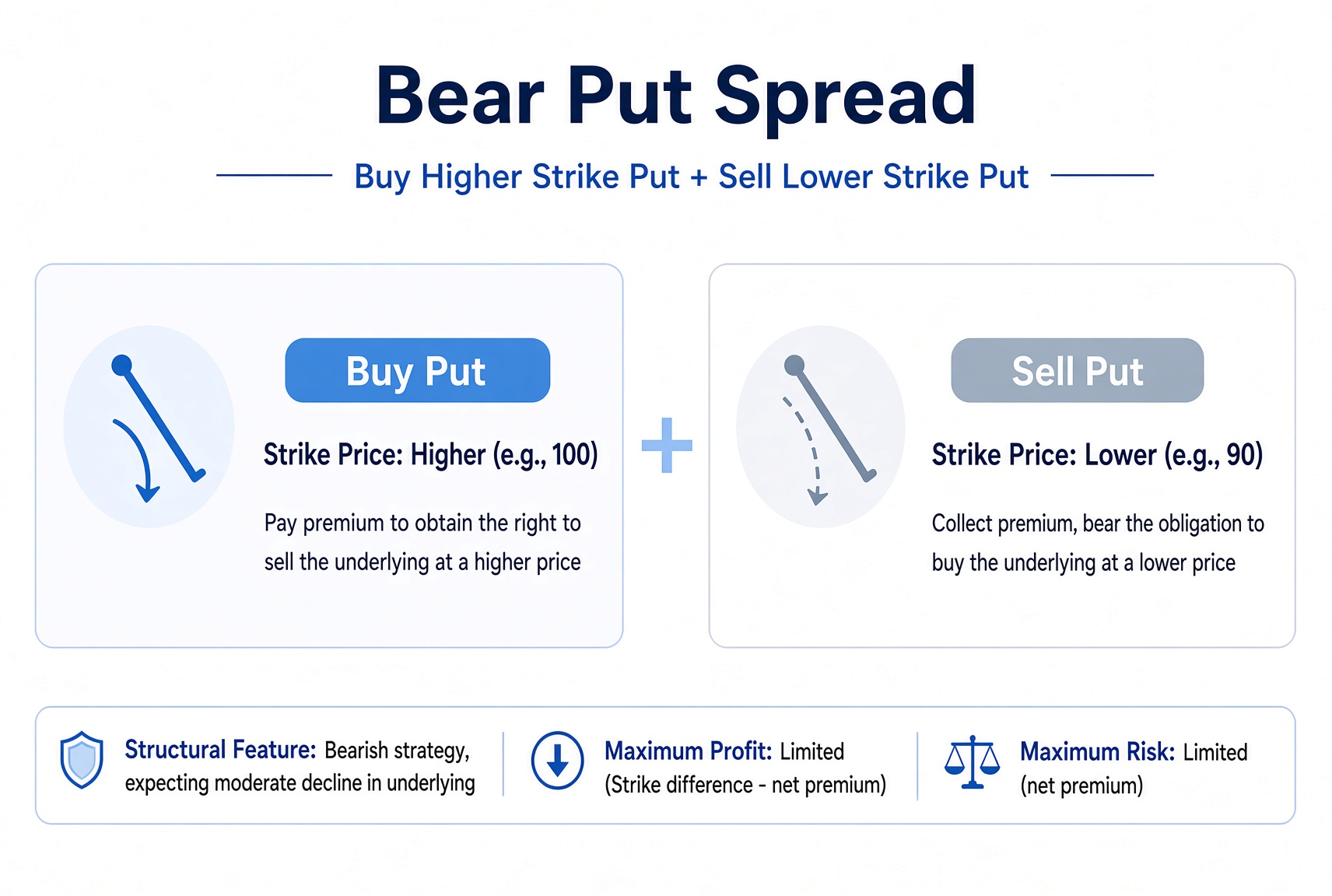
You also pay a net premium, and want the stock to fall. Risk and payoff are both limited.
Takeaway: Buy the higher-strike Put, sell the lower-strike Put. You pay to be bearish; the short leg caps the drop.
The advantage of a hard cap on risk
A single long option: max loss = the whole premium, which can go to zero.
A vertical spread: max loss is known before you open — the net premium paid, or the max loss that corresponds to the net premium collected.
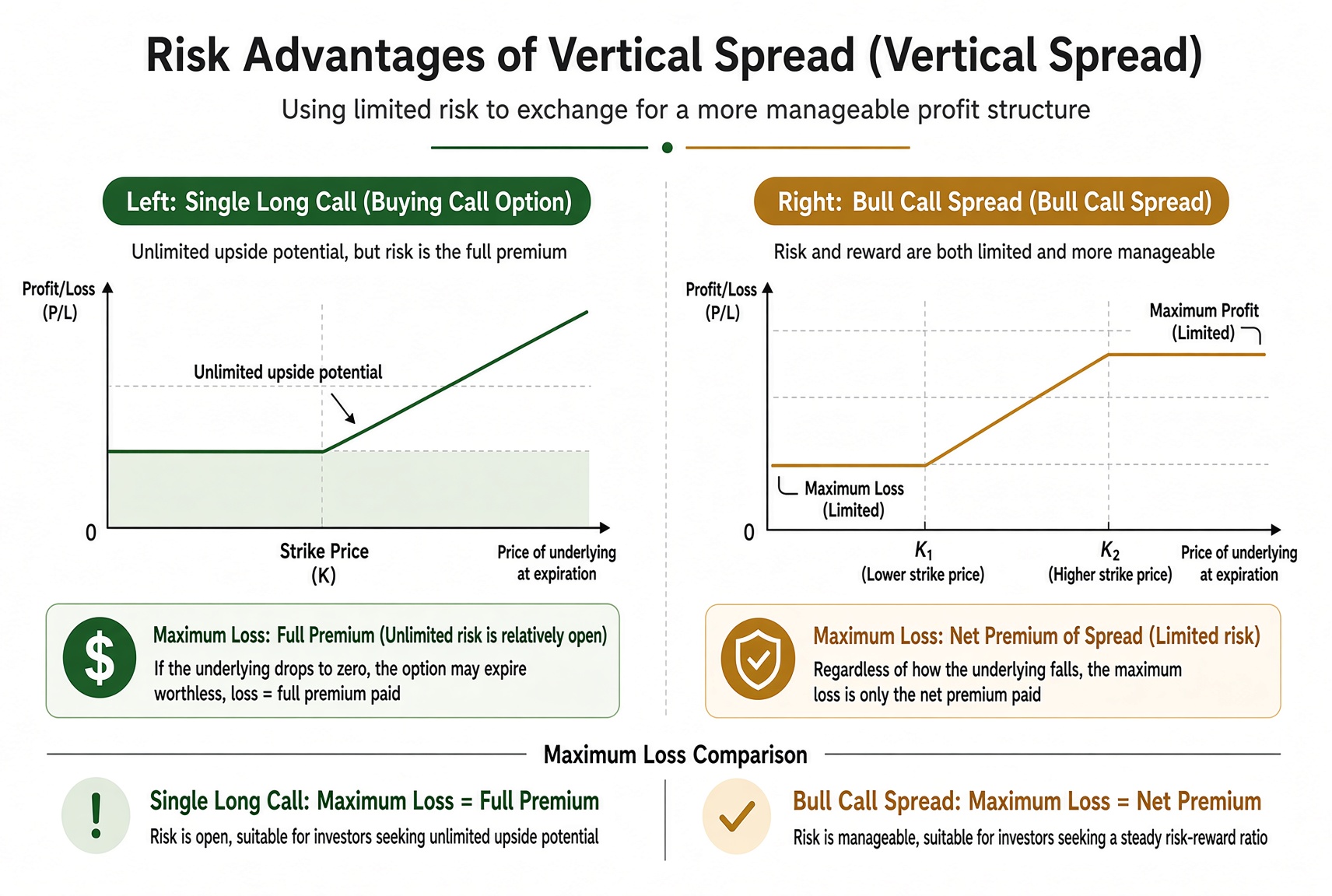
Takeaway: Versus a single long option, a spread puts a hard, known ceiling on the max loss.
Debit spreads vs. credit spreads
Debit spread: you pay a net premium and want the underlying to move your way.
Credit spread: you collect a net premium and want the underlying to stay inside a range.
Both are defined-risk, defined-reward structures.
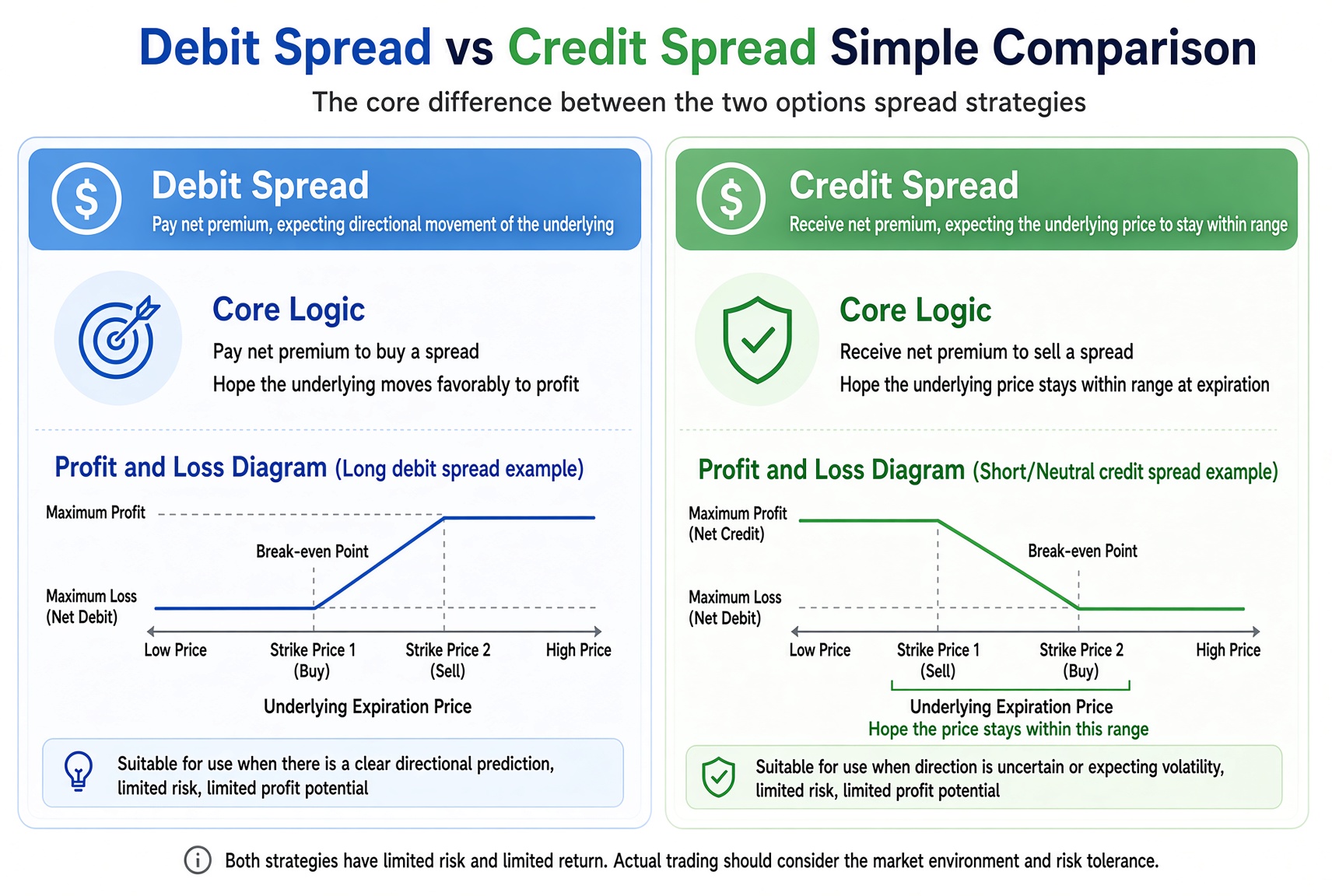
Takeaway: One pays to take a direction. One is paid to bet on a range. First get the “buy one + sell one” logic clear.
Wrap-up, next lesson is position size
Start with a simple Bull Call or Bear Put. Always compute max gain and max loss before you open. Spreads fit a mild bullish or bearish view, not a hunt for a blow-up move. Illiquid options are a poor spread: the bid–ask can eat the profit.
The one line to keep: A vertical spread trades defined risk for a more controllable directional view. It is the first step from a single option into a structure.
Even a good structure, if the size is out of control, can wipe a long run of gains in one trade. The next lesson is how to cap single-trade risk, total exposure, and the head game.
Check these three first
Pass these three before the next lesson. You can skip.
1.A vertical spread trades defined risk for a more controllable directional view.
2.A long vertical can lose more than the net premium you paid.
3.A vertical is two legs: same expiry, different strikes.