Position size and risk control
What you will learn
Cap single-trade risk at 1%–2% of total capital, and use three layers of defense to survive the next mistake
The one rule that matters most
Even a good structure, if the size is out of control, can wipe a long run of gains in one trade. This lesson is how to cap single-trade risk, total exposure, and the head game.
Keep the max risk on a single options trade inside 1%–2% of total capital.
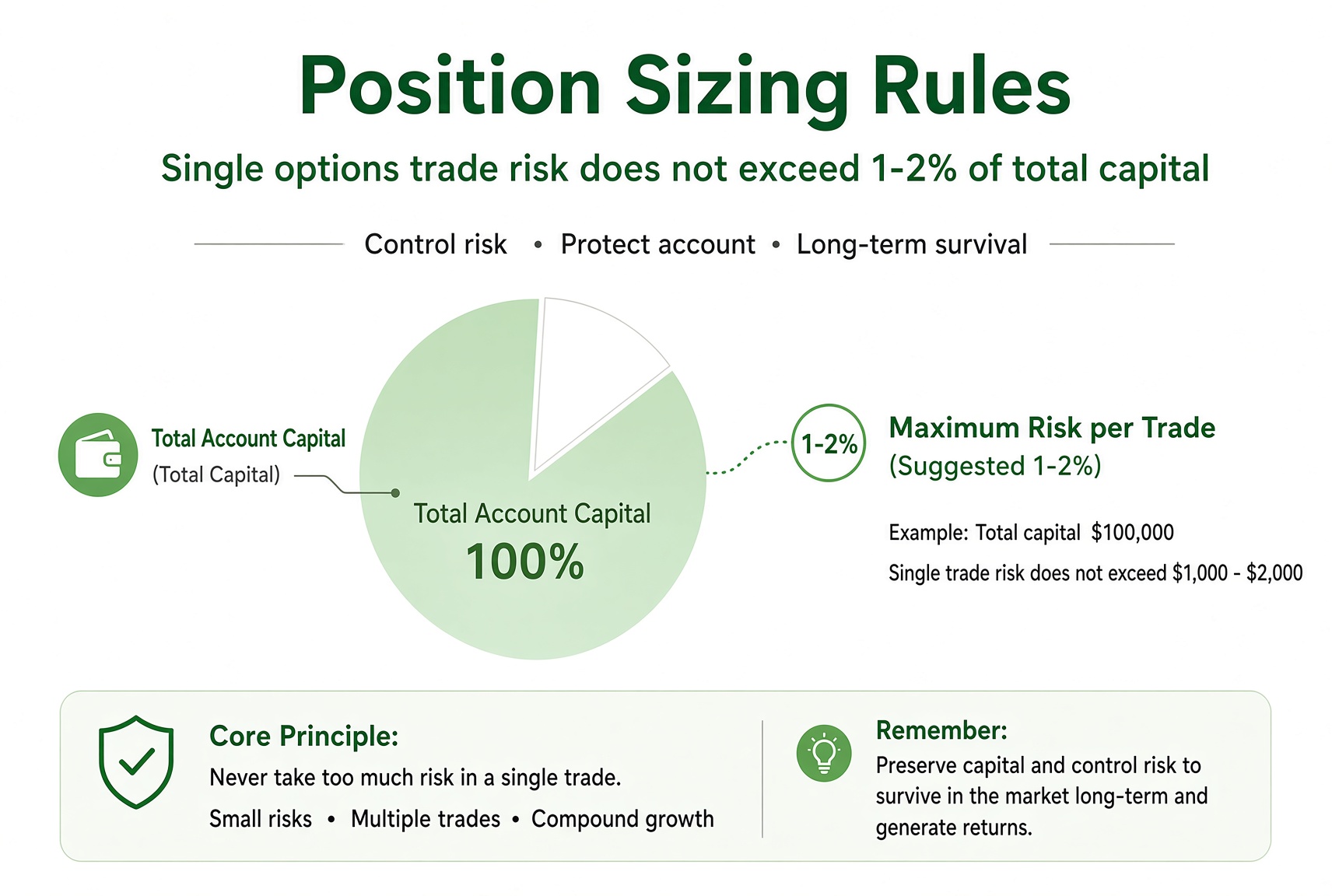
Example: a $100,000 account. Suggested max loss on one trade is $1,000–$2,000. Then a few wrong calls in a row still do not kill the account.
Takeaway: Never take too much risk in one trade. Survive first. Compounding only happens after that.
Three layers of defense
Single-trade risk: know the max possible loss on every trade, and keep it at 1–2%.
Total exposure: do not put every position on the same direction or the same theme.
A written stop: write the exit before you open, so emotion has less room to interfere.
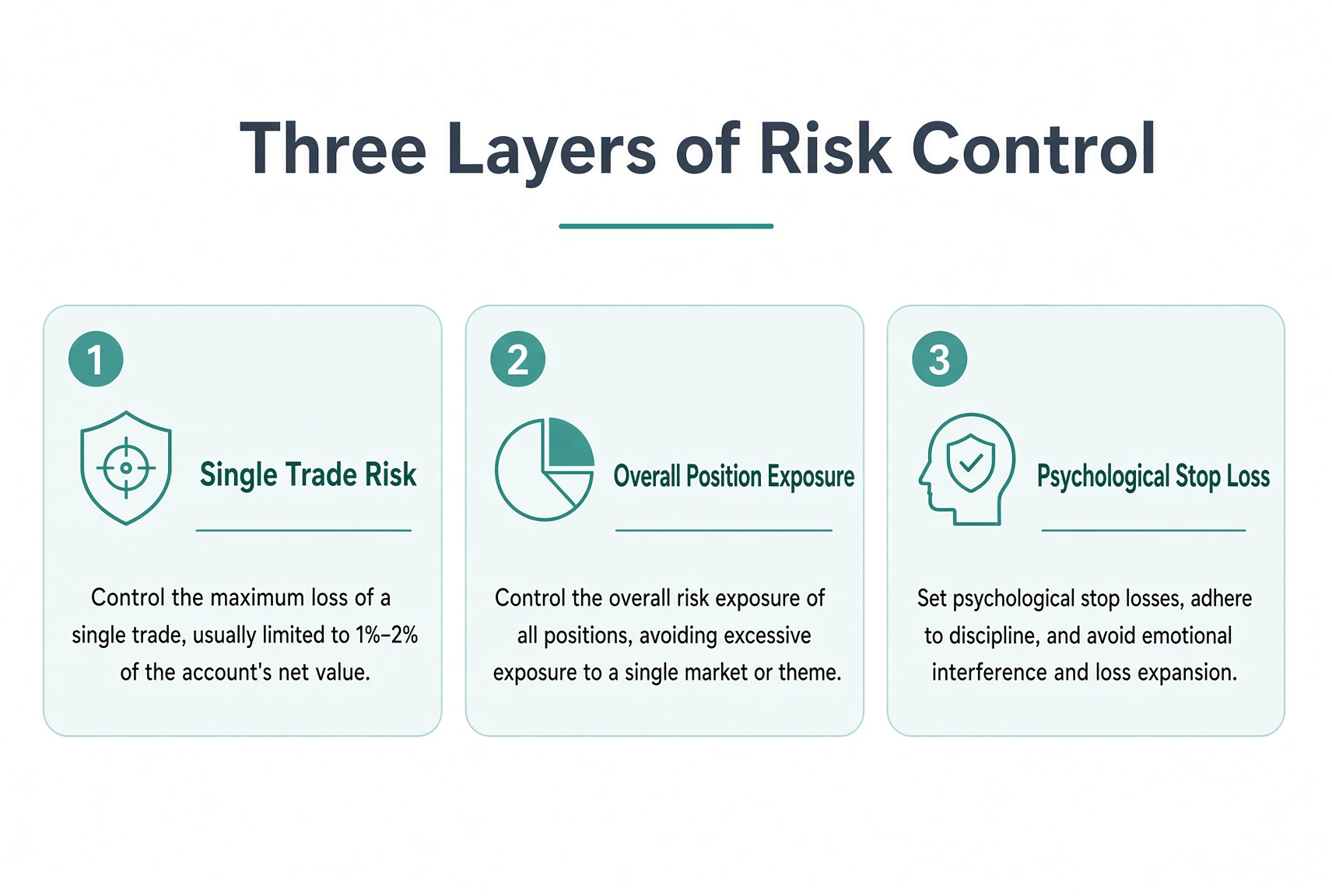
Takeaway: Single-trade risk → total exposure → a written stop. Drop one layer and it is easy to add size in a mood.
Why most beginners fail
Trying to “make it all back in one shot,” size too large, one mistake nearly blows the account.
No stop written in advance, a small loss is allowed to become a large one.
After a losing streak, emotion takes over, the bet is raised, and the loop gets worse.
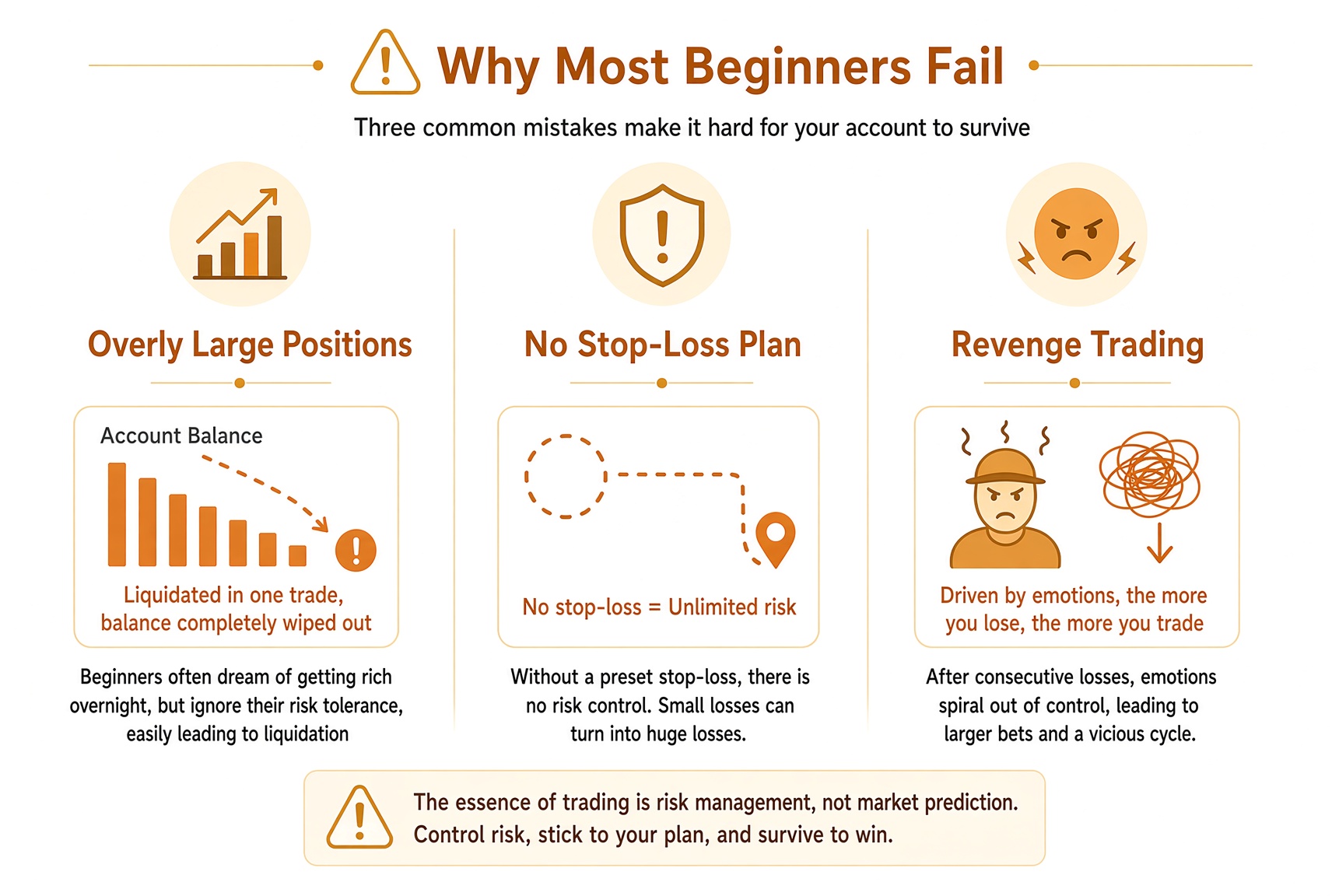
Takeaway: Oversizing, no stop, and revenge trading are the three killers.
A checklist before every trade
Before you open, answer three questions:
How much can I lose on this trade, at most?
Is that number inside 1–2% of my total capital?
If it goes against me, when and how do I get out?
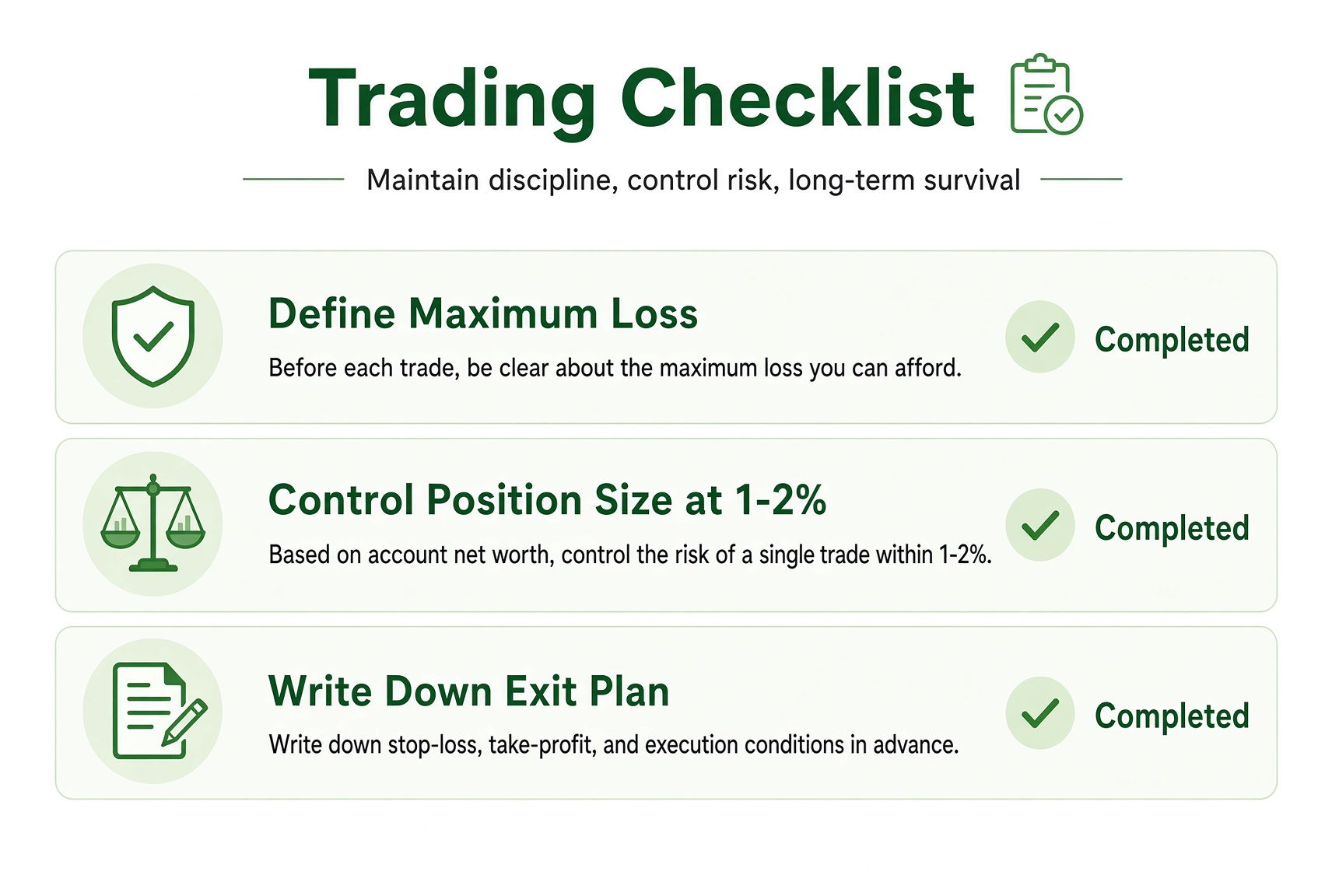
The one line to keep: Options trading is risk management, not market prediction. Control size and risk, stay alive, and you get a shot at compounding over time.
Wrap-up, next lesson closes the course
Size and discipline matter more than learning one more structure.
The last lesson recaps the pits people walk into most often, and lays out a path from beginner to the next stage.
Check these three first
Pass these three before the next lesson. You can skip.
1.Size and discipline matter more than learning one more structure.
2.If you are sure, you should put the whole account on one trade.
3.Before you open, write the max loss and the exit rule.