Common mistakes and a path to the next stage
What you will learn
Skip five common mistakes, and string the basics, the Greeks, the structures, and discipline into a four-stage path
Five mistakes beginners make most
Sixteen lessons in, we have walked from “what is an option” to “how to manage risk.” Finish by looking, in one place, at the pits people walk into most often.
Only buying cheap out-of-the-money “lottery tickets”: the low cost looks tempting, but most of them expire at zero.
Ignoring time decay: the buyer pays for time every day. Direction can be right and the account still lose.
No position control: single-trade risk too large; one mistake can take a deep bite out of the account.
Chasing high IV without understanding it: high implied volatility usually comes with high risk. Understand it before you join.
Revenge trading: after a losing streak, adding in a mood only makes the loss larger.
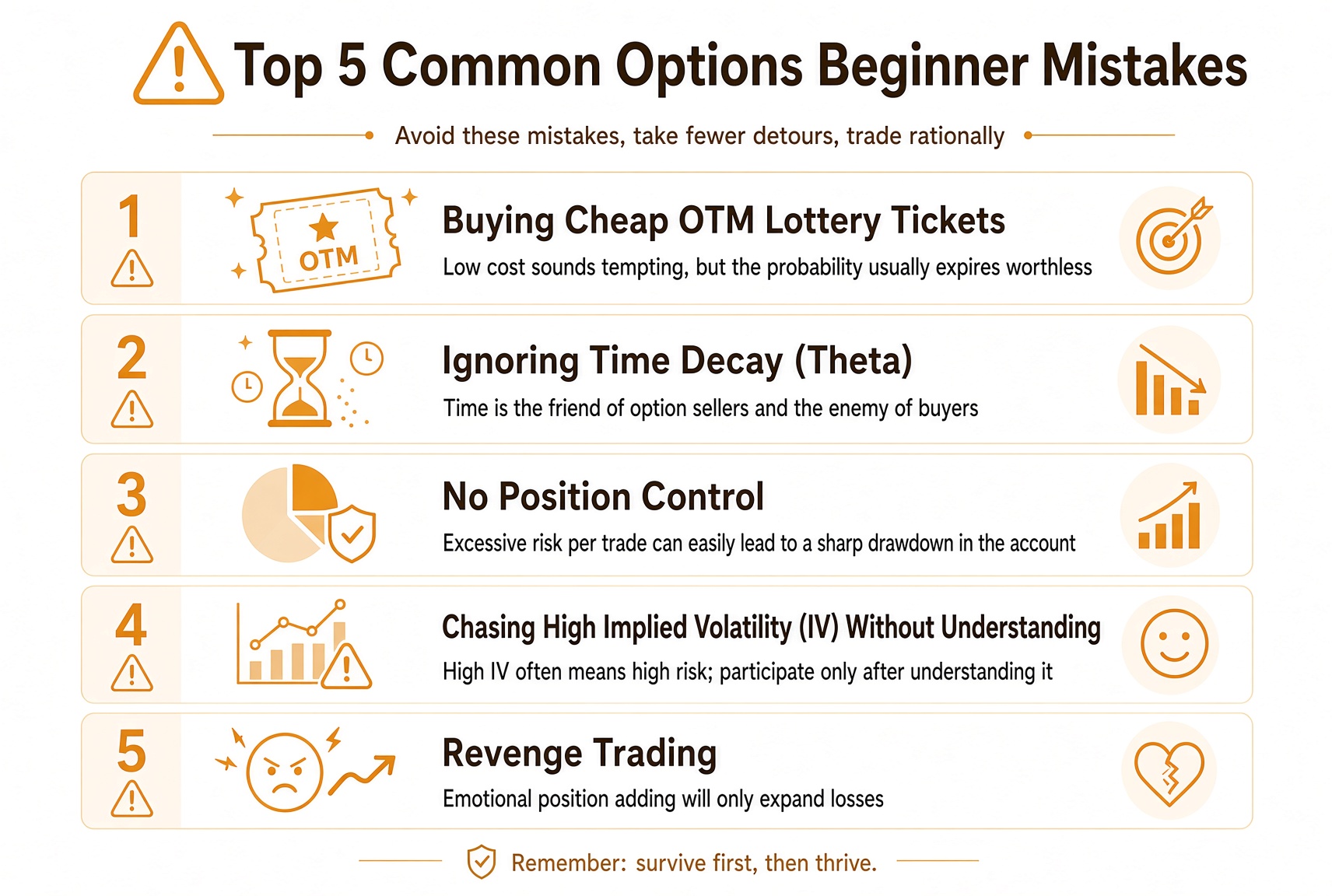
Takeaway: Skip these five and you skip a lot of wasted miles.
A path from first lesson to the next stage
Stage one: get a single option fully clear — Call / Put, intrinsic value, time value.
Stage two: master the Greeks and where risk comes from — Delta, Theta, Vega, Gamma.
Stage three: learn the basic structures — Covered Call, CSP, vertical spreads, iron condors.
Stage four: build position size and execution discipline.
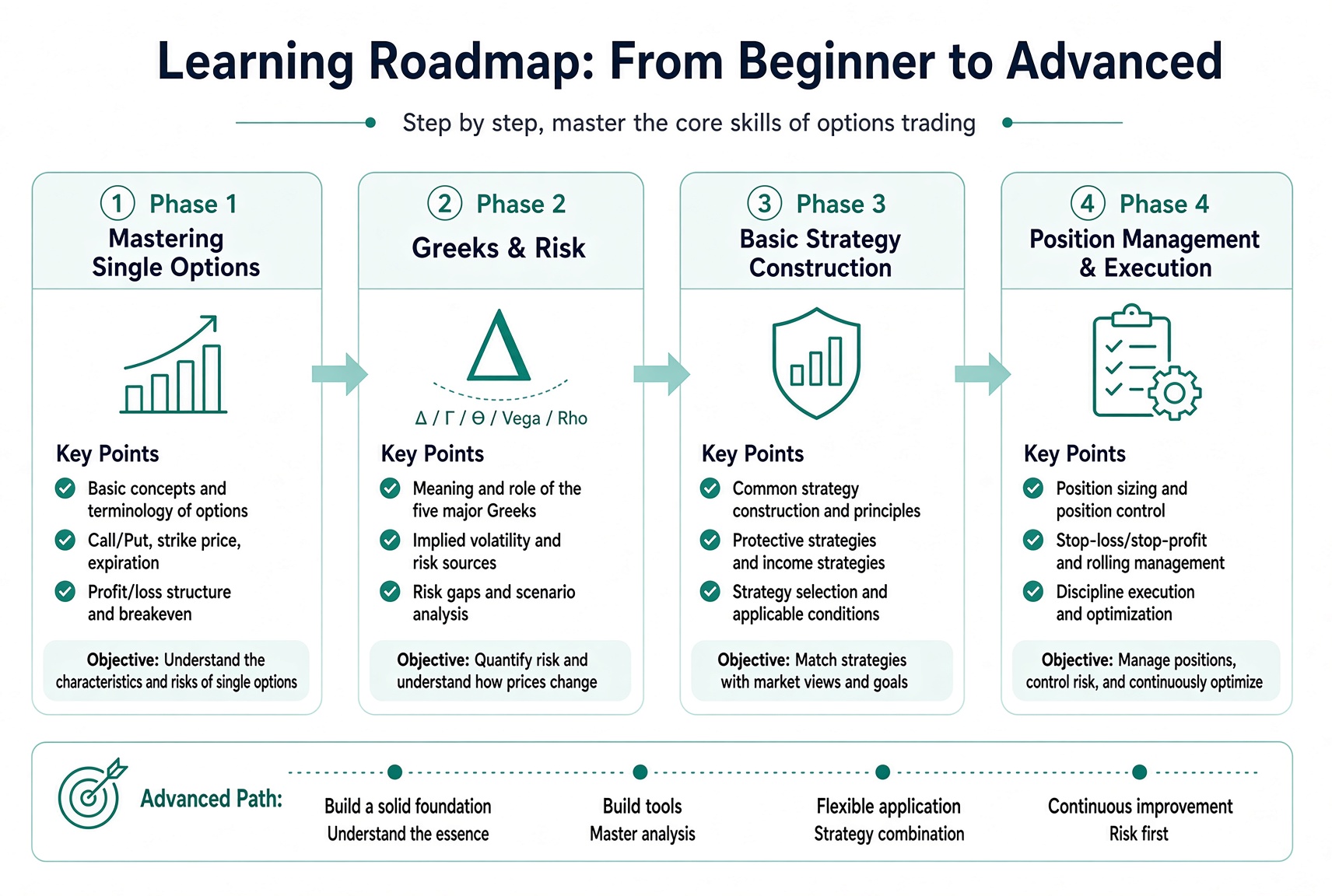
Takeaway: Walk it in order. Get the base down before you expand the structures. Survive first, then talk about complexity.
Principles still worth keeping after 16 lessons
Risk first: the first job of any trade is to control risk and protect capital.
Time is a cost for the buyer: Theta is how you see why “right on direction” can still lose.
Prefer defined-risk structures: in the beginner stage, stay with structures whose loss is capped.
Keep learning and reviewing: the market changes; the skill has to keep moving too.
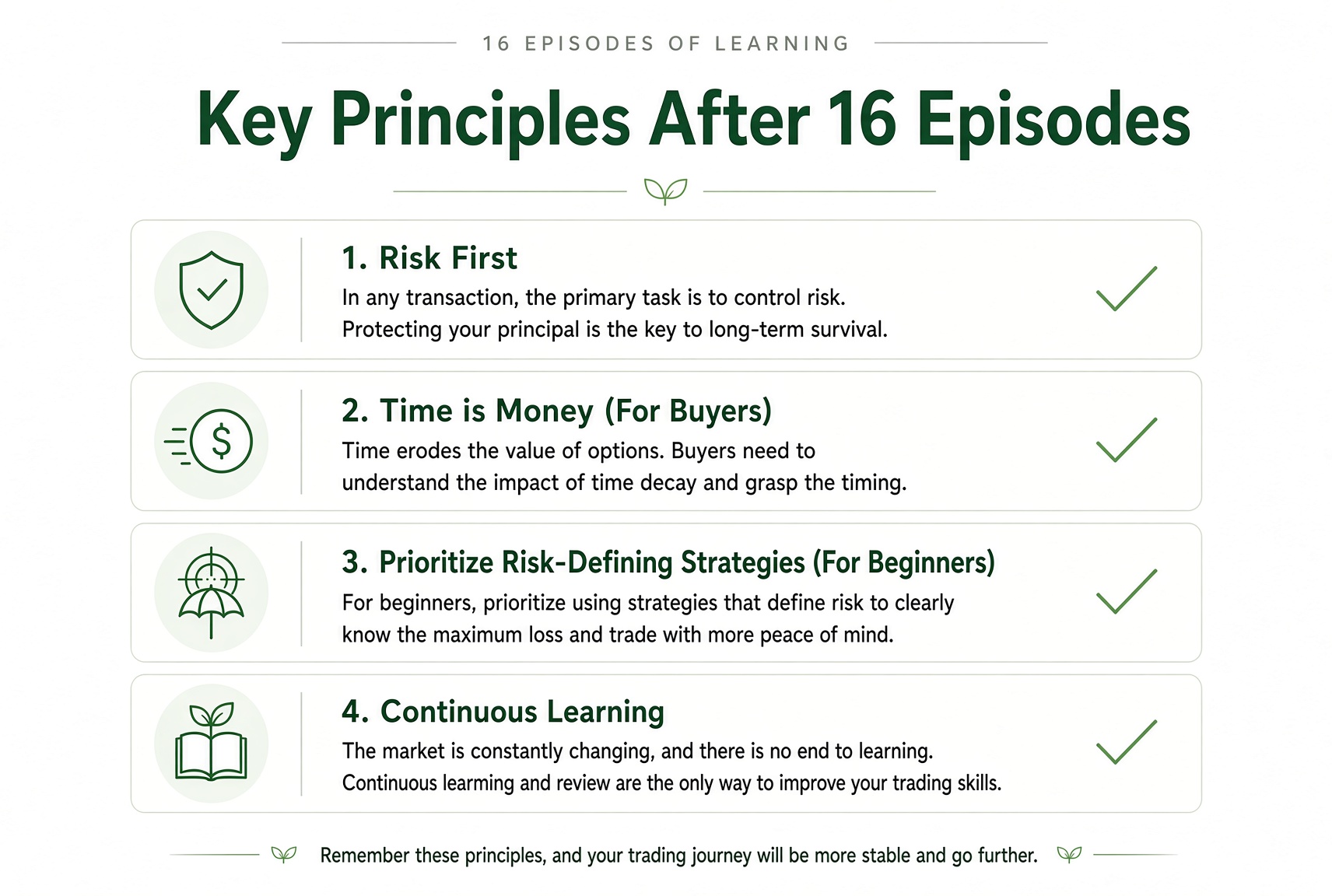
Takeaway: Risk first. Time is a buyer’s cost. Prefer defined risk. Keep learning.
Wrap-up, optional extra: iron condors
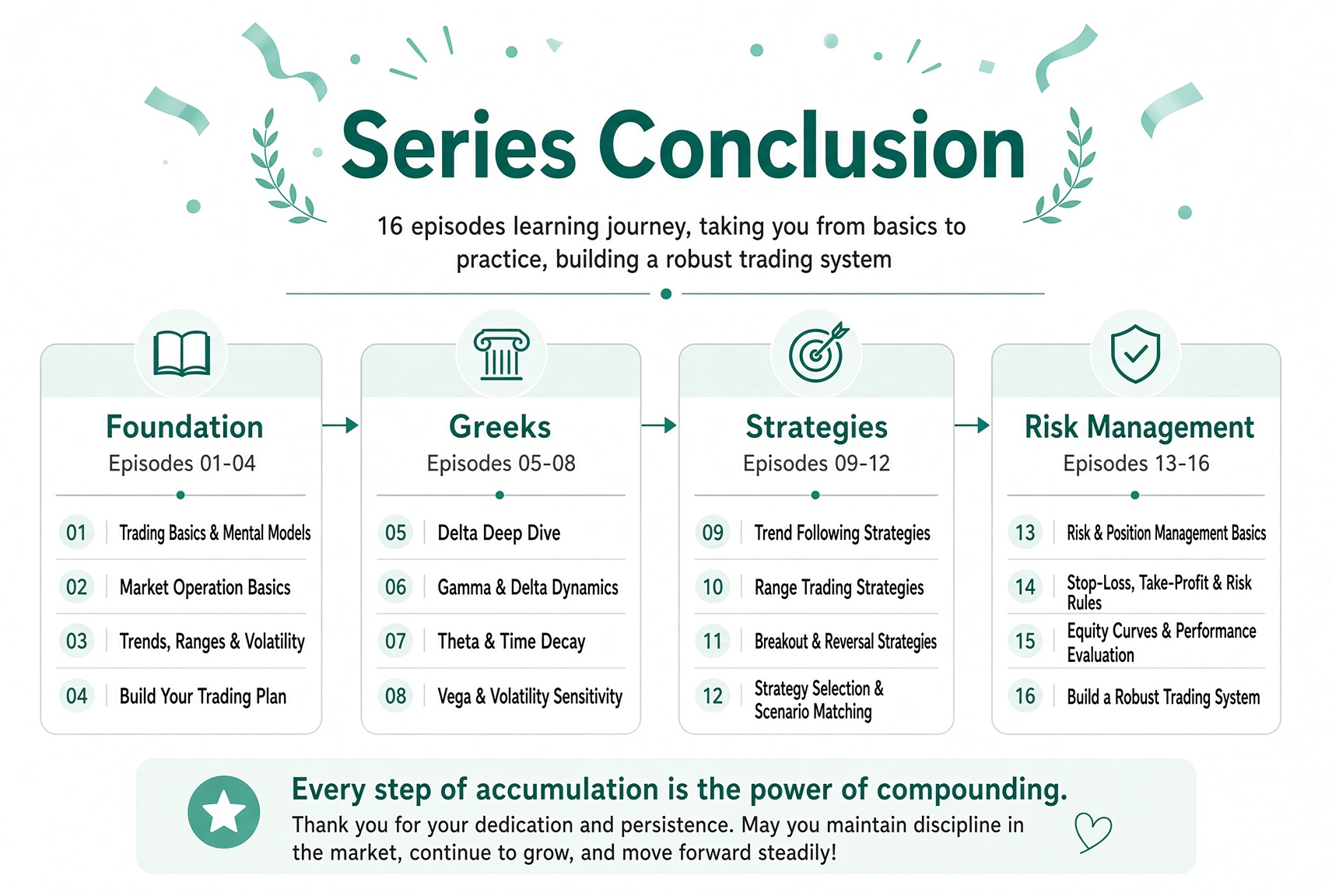
From lesson 1’s “what is an option” to lesson 16’s risk and path, the set now covers the core a beginner actually needs. Real progress comes from practice and review.
First run Covered Call, Cash-Secured Put, and a simple vertical through a paper account.
On every trade, write the max risk and the exit plan.
Review your mistakes on a schedule — not only the trades that made money.
The last line: Options can be a powerful tool, or a fast way to lose money. The difference is not whether you “got the direction right.” It is whether you actually understand the risk, and keep risk management first.
If the earlier structures already feel steady, the next lesson is an optional extra: iron condors and iron butterflies.
Check these three first
Pass these three before the next lesson. You can skip.
1.First run Covered Call, CSP and a simple vertical in a paper account.
2.Whether options make money depends only on whether you got the direction right.
3.The real difference is whether you understand the risk and keep risk management first.